KPOP Jacket Lady
KDrama and KPOP Concert Reviews, Travel Tips, Korean Recipes and more
Itaewon Global Village Festival.
One of the largest multicultural events of the year in Seoul is the Itaewon Global Village Festival, held every Fall since 2008. From what I can tell it has gotten biggest and better each year and it is definitely worth putting on your list for next year.


We went late afternoon to give ourselves time to look around before it got dark, The crowds were intense, as were the lines for the ‘Beers of the World’. You could tell some people were having lots of fun drinking their way through various countries.


We headed through the crowd to the BBoy Battle which was amazing. They had some really talented guys from multiple countries and it was really cool seeing them compete.
The midway point where you could branch off to a side street was crazy busy with people, not least because there was also another stage set up there. This one focusing on DJs as we passed by.

We went down the side street where there were lots of stalls from various countries showcasing their culture, arts, and food. We looked, and learned, and then of course ate and drank. It was much easier to get interesting beers there too.

A smaller stage was tucked in at the end of the side street.

Street performers staked out slightly quieter areas to showcase their abilities, and people found places to eat all the delicious ethnic food choices away from the main stream of people.
As it got dark the crowd increased and as we made our way back to the crossroads we decided to see if we could find a quiet place to take a break. Fortunately we found a bowling alley right on the main street.


We stopped in for a couple of games and a bite to eat and of course drink. Bowling is expensive in Korea because it takes space, and space costs money. Even so we had a blast and this was a funky little place to hang out and bowl.

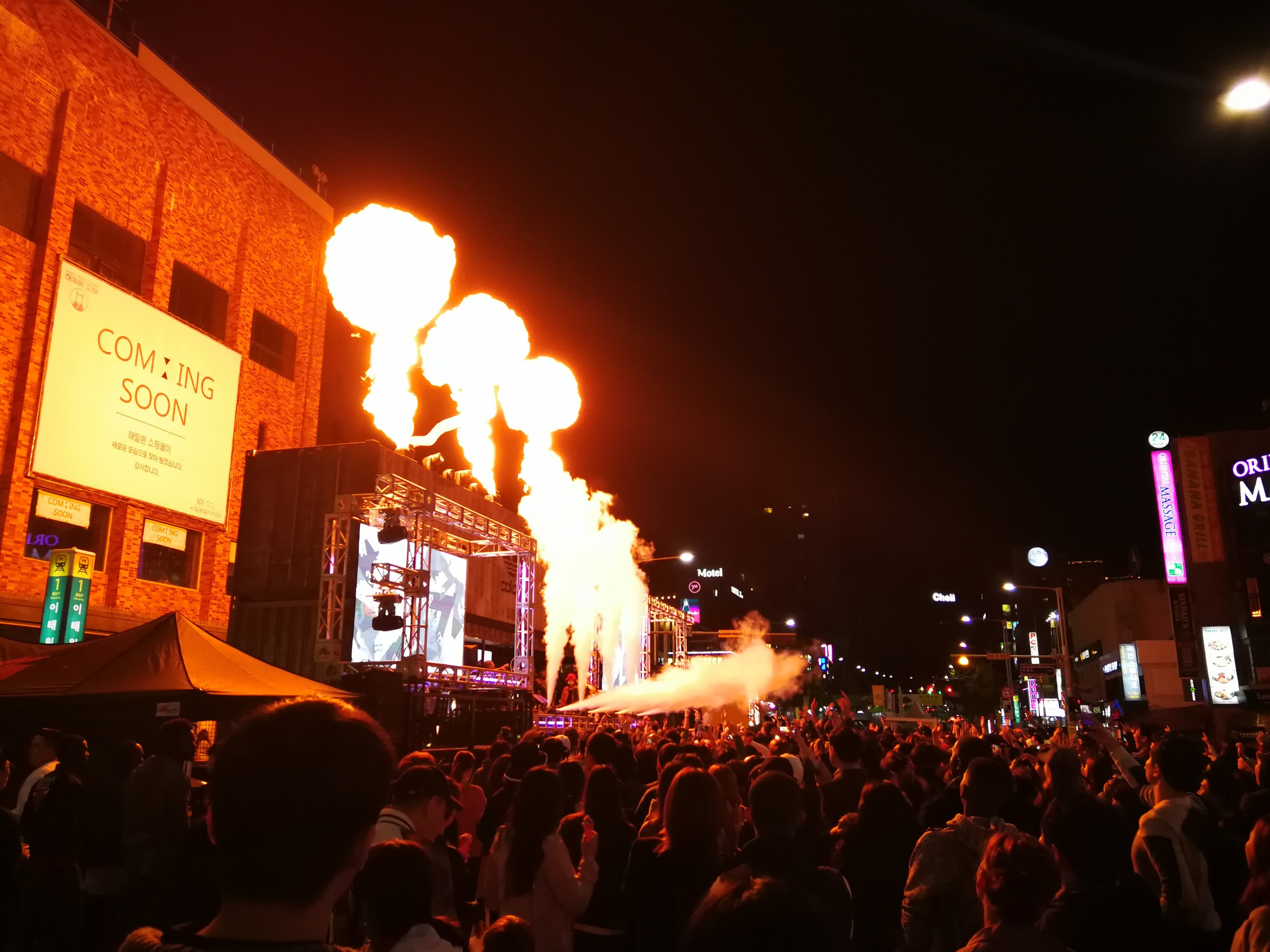
We walked outside to find the crowd was still intense and it seemed like people were waiting for the show to start.


And when it did the crowd went wild, we could feel the heat from the flames even from towards the back of the crowd. Wow.

We had a great time at the Global Village Festival for many reasons, but I think the biggest one was perhaps the fact that there were so many people from other lands there. I’m not just talking about tourists, but people from all over the world who were now living in Seoul and were sharing their diverse cultures with everyone. We heard so many different languages it was really interesting. If I’m in Seoul in October next year I definitely go again.
Have a great day everyone.
You may also enjoy Seoul Bamdokkaebi Night Markets, Pojangmacha: Better Known To Some As A Soju Tent, and Korean Games.
Please do not copy or use without permission and accreditation. All photo credits to Elizabeth and Debora Marzec,
Nighttime Cruise On The Han River.
Many of the major cities of the world have river cruises as one of the must do things for tourists when they visit, and the Han River cruise is one of the ‘top ten’ things to do in Seoul. We enjoyed our cruise, however, it is not like doing a river cruise on the Thames, (London) or the Seine, (Paris). To begin with the Han River is wide, very wide, so you’re a fairly long way from the river banks, secondly there’s not really that many notable or historic landmarks along the way. So much of the cruise is just looking generally at the city lights, with the Namsan Tower in the distance being the most famous landmark, and this can almost disappear on a cloudy, or hazy night.

This doesn’t mean that it isn’t a fun thing to do, it was enjoyable, even if it was a little cold up on deck. (We went in October.) It is a good idea to go during the time the Banpo Bridge Rainbow Bridge does it’s evening shows. (Usually April -October, but check before you go.) The docking area is lit up with festive lights and there’s a cafe area and restrooms for while you wait for your cruise.


The bridges are lit up as are the other cruise ships, while there’s lots of city lights to see during your trip on the Han River.

One of the more colorful sites you can see from the river is the Some Sevit Culture Complex. It consists of three made made floating islands with buildings on them, one of which was used as the gene laboratory in The Avengers, Age of Ultron. It is worth visiting Some Sevit either during the day or on into the evening as it is a cool area to walk around and there’s a restaurant, a cafe, and art spaces.


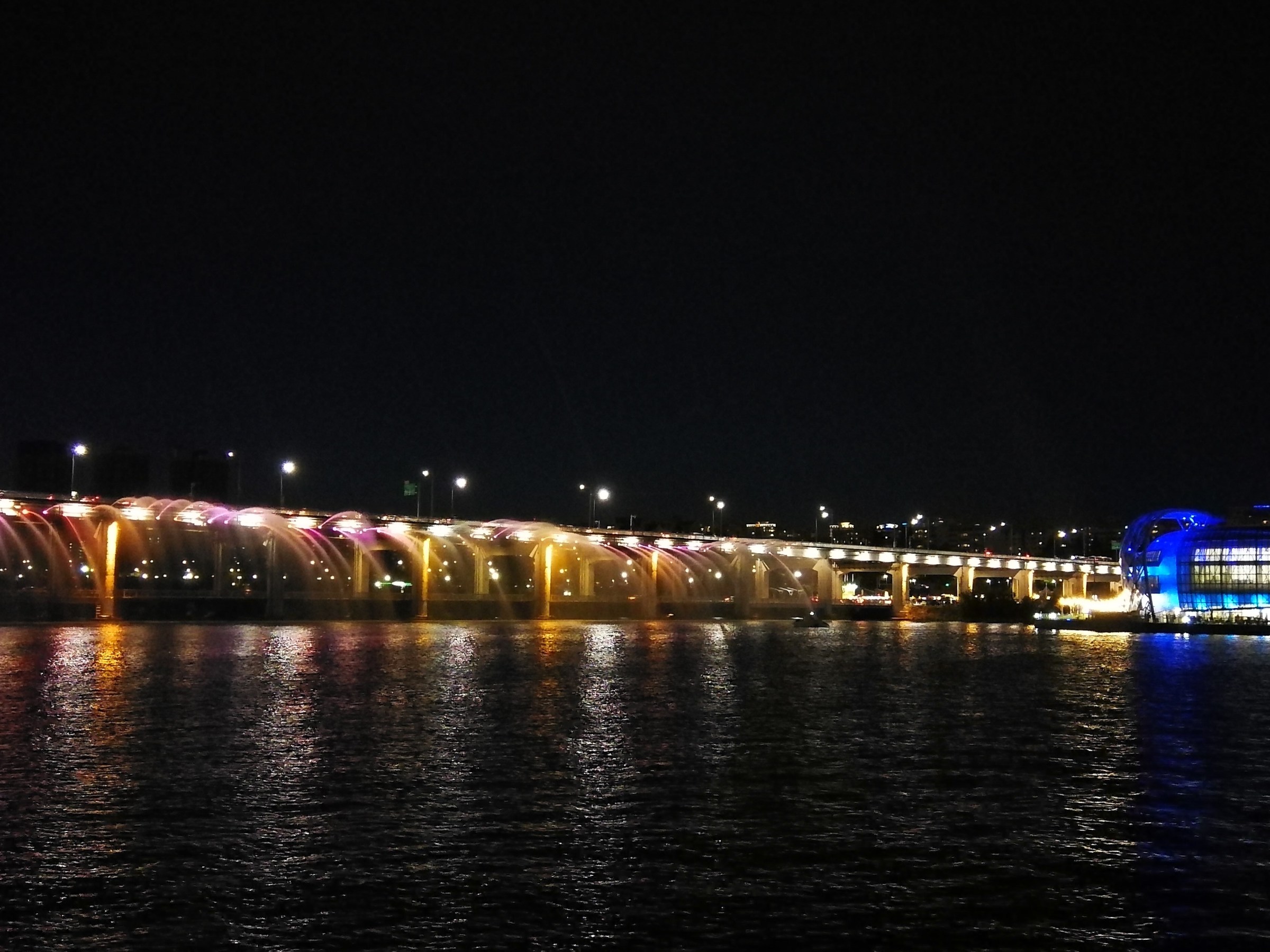
The Banpo Rainbow Bridge Fountain show is probably the main attraction though. We had seen it before from the land so we were looking forward to seeing from the river. It really is quite impressive.


You can get much closer to the fountain from land, but the view from the ship was really nice too.


The cruise company does a little fireworks show just before you dock for some of the cruises, which was a nice ending for the cruise.
The cruise was nice, perfect for a romantic couple, or just to watch the shore go by, but not sure I’ll do it again, as Seoul has so many other things to do at night. If you’ve done the cruise and have anything else to add please use the comments section below.
Have a great day everyone.
You may also enjoy A Look At Hongdae, Pojangmacha: Better Known To Some As A Soju Tent, and Seoul Bamdokkaebi Night Markets.
Please do not copy or use without permission and accreditation. Photo credits to Elizabeth Marzec.
Busan One Asia Festival: Opening Concert 2017. Part 2.
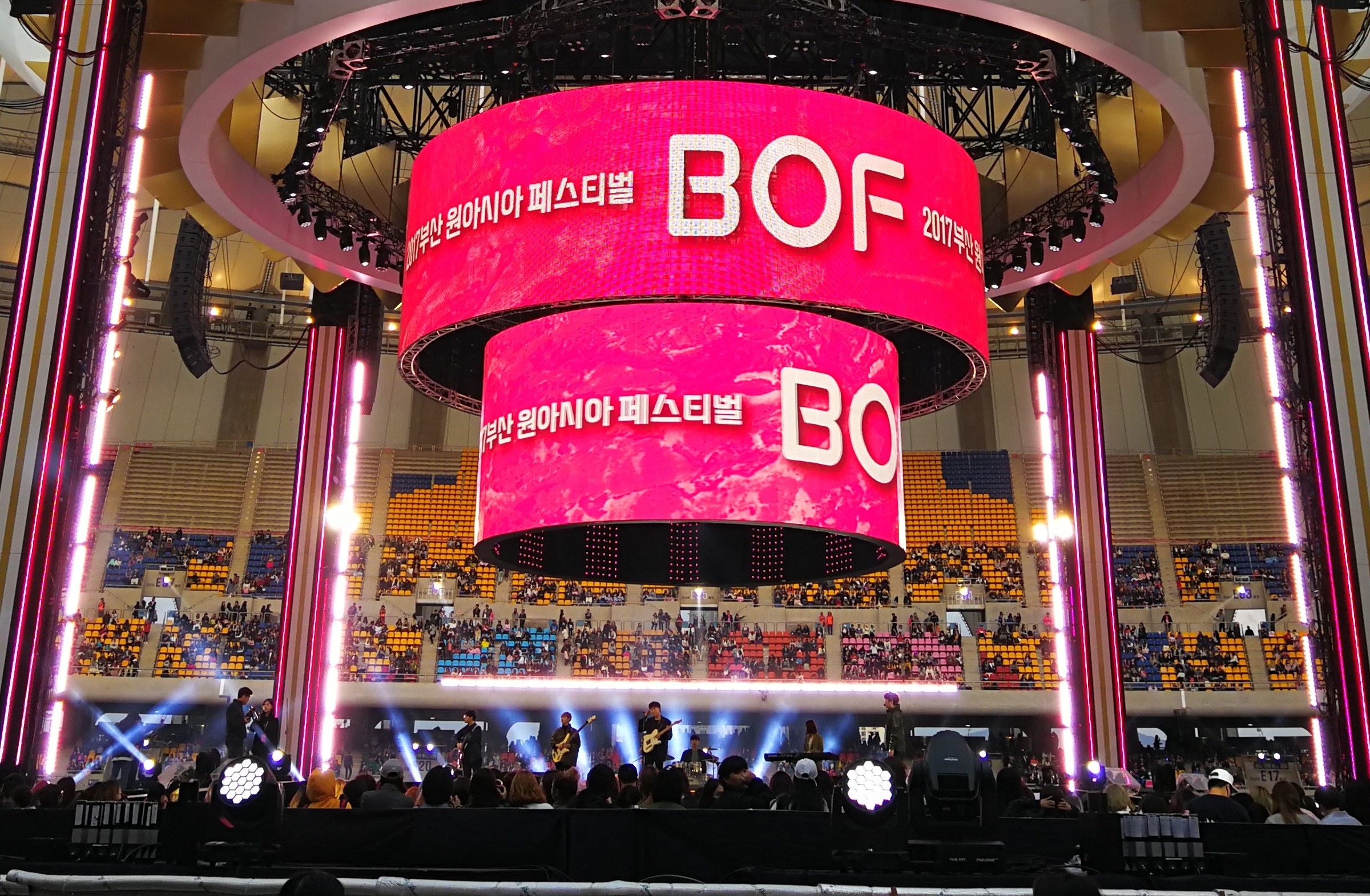
In part one I mainly spoke about the lead up to the actual groups performing, here you’ll find my thoughts on the main part of the concert. There was quite a bit of speaking throughout the evening by the MC Nam Goong Kim and other presenters as this was the opening ceremony/performance for the festival. It was during these interludes that I really felt how cold it was sitting in such a large open space on a cold October night.


First to perform was Momoland who sang Freeze, and Wonderful Love. They were really energetic and cute and did a great job. Whenever JooE was on a stage it was hard not to just focus on her because of her ebullient personally, but the other members were worth watching too, and they started the evening off with a solid performance especially being the opening act on such a cold windy night.


After their set there was a little bit of interaction between Momoland and the next group Astro as the boys gave flowers to some of the girls.

One thing about a live recorded show is that the cameras often get in the way of those watching it in person. I’ve watched the recorded show and it doesn’t do justice to the actual live show. They kept moving the cameras around like crazy which ended up with a choppy and uneven end result. It is actually one of my pet peeves with Korean music show camera practices, by trying to be all clever and capture cool angles they often don’t convey the real feel of the actual performances. Also I don’t know how they did it but they seemed to also capture crowd photos of people who look totally disinterested in what was happening on stage. Everyone around me was pumped up and having a great time.


Astro came next and gave us a sweet, cute and bubbly Baby, with lots of smiles and winks.

The change from Astro to the next group was very dramatic with dark cloaked people stalking onto the stage with intense dark lighting and music. We were all curious and then slowly began to realize it was SF9.


After the reveal and the extra dancers had left the stage they performed O Sole Mio. This was probably one of my favorite performances of the night. From their dramatic entrance to their well synchronized dancing, and their command of the stage they had the crowd mesmerized. I also enjoyed that their jackets became capes which was a nice touch.
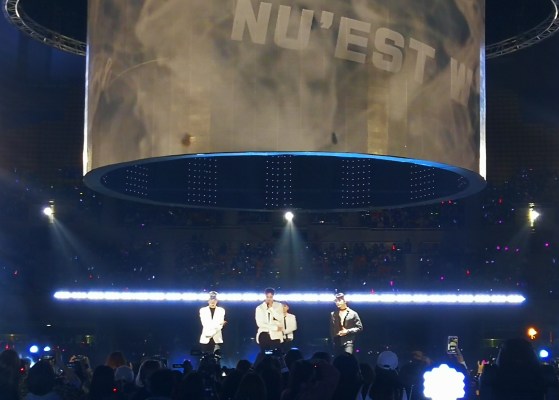
Things slowed down for Nu,est W who sang the slower tempo Hello. I had been very much looking forward to their performance as some of my friends are huge fans, and I had followed them in their early days, think Face and Not Over You. However I have to say I was a little disappointed. There was a lot of walking around the stage and them kinda posing. In all it felt as if they were uncomfortable. I may be alone in thinking that as they seemed very popular with the fans around me.
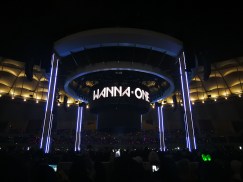
When this name came on the big screen the crowd went wild. Wanna One walked out in black pants and white tops which was a great choice for standing out on the large, colorful stage.


They sang Pick Me which got the fans hyped back up, they also made sure they walked to the edges of all sides of the stage to allow more fans to get a good look at them. Towards the end of their set numerous young dancers came out and danced along on the outer circle stage. Pretty much everyone in the stadium was bopping along in their own way.

It may be hard for some to believe, but the cheers and screams for the next group actually intensified. They came out with that ‘bad boy’ swagger and charisma they have and took the place by storm.


They performed Bling Bling + B.Day with raw power, and pumped the crowd up until everyone was jumping and singing along. It was amazing how we went from being at a concert to being part of a rocking party. iKON were loud, somewhat crass, and fantastic. The fire and flames helped with the party feel, and definitely warmed us up. (We were close enough to feel the heat, which was welcome.)
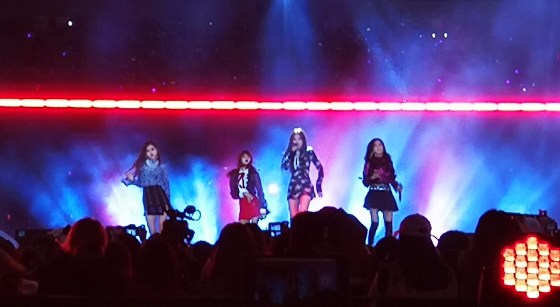
Label mates Black Pink were next and I had been looking forward to seeing them live. They performed Playing With Fire and As If It’s Your Last. Their performance was good, just it seemed like a little something was missing. I wanted them to be great and they weren’t. They had a stronger stage presence than many of the other girl groups and they definitely weren’t cute. Rather they were sultry, and flirtatious in a more grown up way. more like women than girls. Their performance was solid, but I didn’t feel that ‘wow’ I had expected.

This is about the halfway point for the evening and rather than make this post too long I think I’ll add a part 3 to cover the other performances.
In defence of many of the groups, both male and female, the stage itself was huge and very colorful and attention grabbing. It was hard for everyone to compete with that, plus the wind and cold night. The boom cameras zoomed around, and the cameramen running around on the stage didn’t help either. Plus the audience had been outdoors for hours and were possibly hungry and thirsty so it took a lot to grab and keep everyone’s attention for the whole time, so I feel that I may be being a little harsh in relating my experiences. I do, however, look forward to seeing all these performers perform in an indoor venue in the future, and I will stress that I thoroughly enjoyed the whole show.
Have a great day everyone.
You may also enjoy KPOP Night Out @ SXSW, HyunA Charms Her Dallas Fans, and SHINee World V Tour In Dallas.
Please do not copy or use without permission and accreditation. Photo credits to Elizabeth and Debora Marzec.
Seonyudo Park: In Photos.
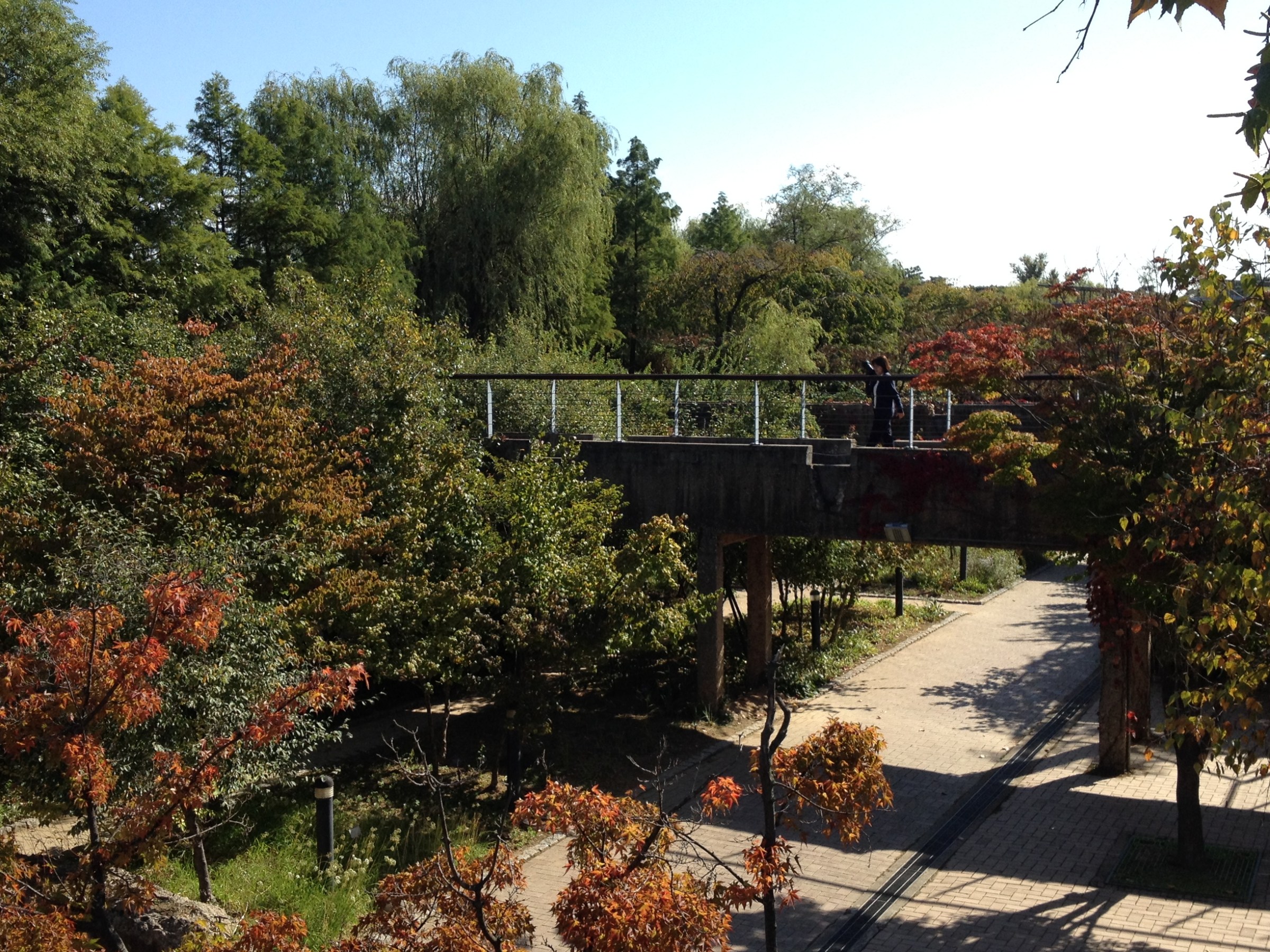
Seonyudo Park is located on an island in the Han River, Seoul, S.Korea. It in fact takes up the whole island which means lots of great views across the river in all directions. I don’t know why it took us three visits to Seoul to find this gem, but now it’ll be high on our list for repeat visits, especially at different seasons.
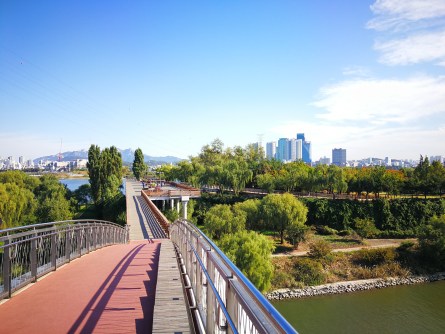
To get across to the island the most scenic way is to cross the Seonyudo Pedestrian Bridge which crosses over a huge multi lane highway as well as part of Yanghwa Hangang Park and the Han River.


We weren’t the only ones stopping on the bridge to take photos as the views were quite lovely.
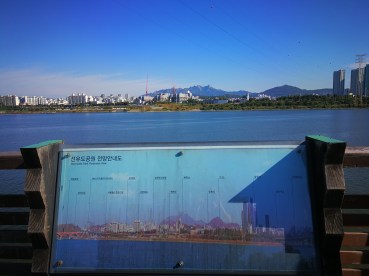
Once on the island we stayed on the upper decking and strolled to the far side of the island that looked out over Seoul. The observation deck was well stocked with benches and some shade for those who just wanted a scenic place to relax, or have a picnic.

We descended down into the park and found a map which proved useful as we needed an early morning cup of caffeine to kick start our visit. The cafe overlooked the river and the city and was a pleasant break.

Seonyudo Park is built on the former site of a water purification facility and we were interested to see how that had been incorporated into a public park.

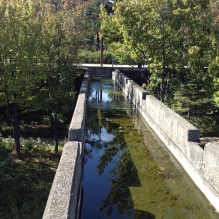
The ground floor level had running water mini canals that surrounded a basement level courtyard garden built within the remains of part of the old water purification plant.
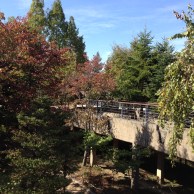

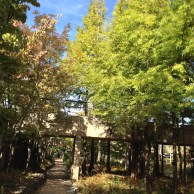
It was a very effective use of the old concrete structure.


We wandered out into a more open area which showcased various water, bog and marsh plants.
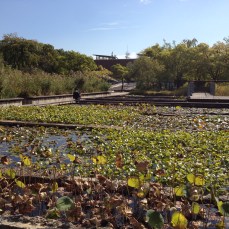
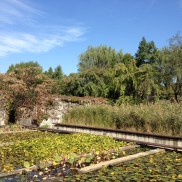
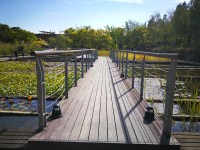
This led us towards some buildings which we bypassed as it was such a glorious morning, although we noted an area where the old concrete pillars had been left standing, but were covered in a vining plant. It was very sculptural and a little apocalyptic as it showed nature taking back the space, albeit in a controlled way.
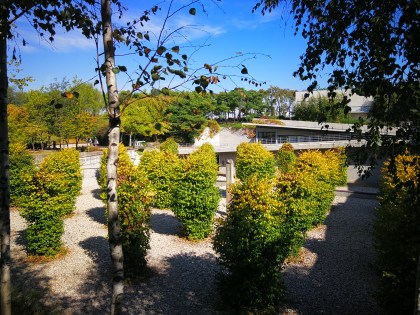
We strolled through a water playground that looked a little sad and deserted since it was already the beginning of Fall. I can see it being extremely popular in the summer.


The sound of running water drew us to another reused part of the old water purification plant.
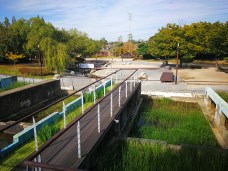

And then on into the greenhouse beyond where there was a nice display of an ecological water purification system.

There was also a more typical greenhouse area with cactus and succulents.

As with most large public parks there were some things we missed, or rather saved for a future visit, as well as scheduled activities which seemed to be mostly geared towards children. The park is quite popular especially on weekends. It also stays open late so is popular for sunset and after dark visits to see the city lights. You can get to it easily from Subway line 9, Seonyudo station exit 8. Walk straight until you come to a busy road, look left and you’ll see the pedestrian bridge, walk towards it and cross to get to the island. You can also get to the other end of the island from the Yanghwadaegyo Bridge.
You may recognize the park from multiple Kdramas, notably Boys Over Flowers, and Princess Hours.
Have a great day everyone.
You may also enjoy Yeomiji Botanic Garden: In Photos, Seoul Forest Park: In Photos, or Looking For Cactus & Succulents In South Korea.
Please do not copy or use without permission and accreditation. Photo credits to Elizabeth & Debora Marzec.
Busan One Asia Festival: Opening Concert 2017. Part 1.
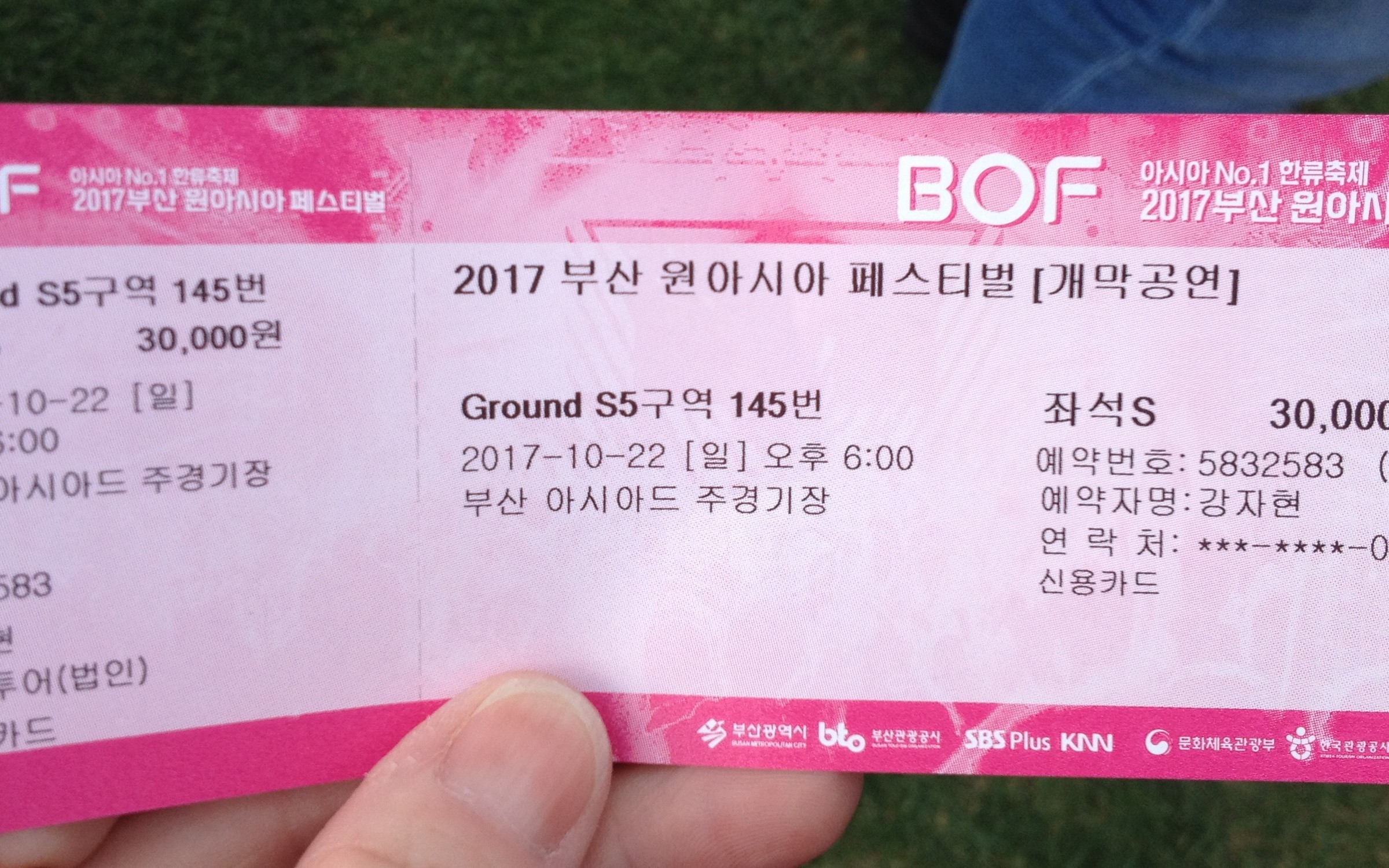
One of the many reasons to consider a trip to Korea in the Fall is the annual Busan One Asia Festival which is a large multi-day, multi-themed event with different activities all around the city. For Kpop fans it allows quite a few opportunities to catch a glimpse of their favorite groups. We knew ours was going to be a quick one day trip to catch the opening concert, but another time I hope to be able to spend a few days in Busan exploring all the festival has to offer. We managed to get ‘foreigner only’ tickets through Trazy, but I suggest you try another tour group as we were not very happy with their, shall we say, organizational abilities.
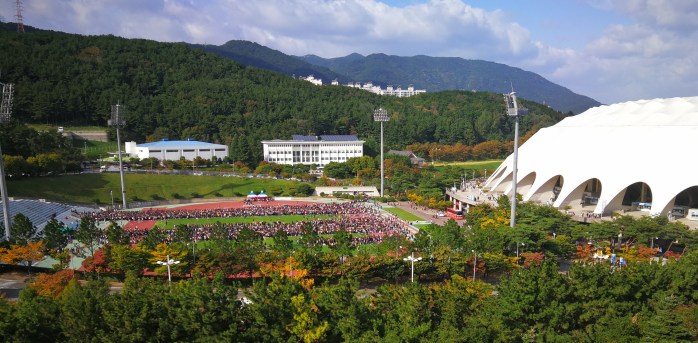
The tour bus dropped us off at the end of a very long line of buses and we took this photo on our 20 minute walk down to the line for our particular section. The venue had tried to separate the lines into the difference sections of the arena to make it easier to let people in once the doors opened. Many people had been waiting in line for hours before we arrived, but since we had seats we weren’t too concerned. There were fans from lots of different places around the world in our ‘foreigner’ line which was kinda cool. Since we still had a few hours before they would let us in we chatted and got to know each other. My jacket received some love as people tried to spot their favorite groups.
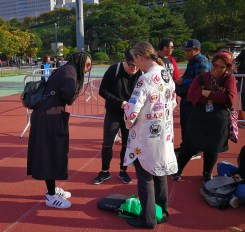
It was very windy to the extent that some of the metal barriers were blown over and the food truck pop up roofs were bouncing around like crazy. Dust and grit was kicked up and we all soon learned to stand with our backs facing the wind. We were on the edges of the outer bands from typhoon Lan and were lucky we only got the strong winds.


I was interviewed by someone from the concert organizers which was cool, although the wind made that a little tricky too.
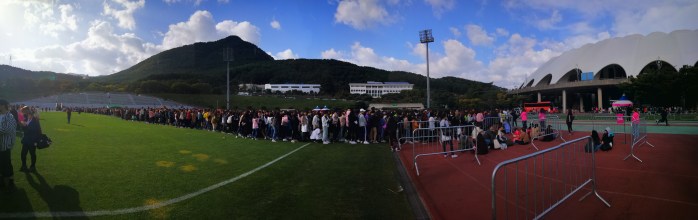
The really long lines were for the standing room areas near the stage and there were a lot of fans in those lines. When it came time to let the lines in, the line next to us was just in chaos, it was the first time I’ve ever seen anyone get pushed to the ground and trampled on. It was quite horrifying. Fortunately security acted really quickly and one older guy in particular waded in and saved the day. After that they made everyone walk in like schoolchildren in lines with a concert staffer in front and back of smaller lines of people. Between that and the bag search at the entry it took them a very long time to get everyone inside. Some people were still coming in as the concert started.


We got inside in plenty of time and were pleasantly surprised to find we had decent seats. We were also on the side with the main cameras which meant that a lot of the ‘action’ would be facing us, and we wouldn’t just be seeing the back of idols.
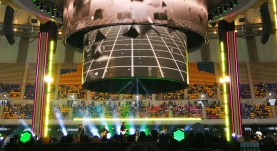
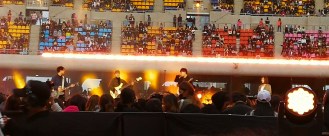
To help keep us happy before the main concert started we were able to watch a band who were really rather good as well as a female singer.
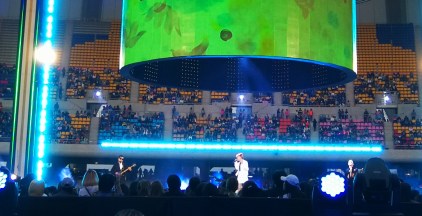
I think they also used these performers for soundcheck and camera practice which was smart of them.
As night began to fall the temperature also fell to the point that it was downright cold. The wind, although somewhat less within the stadium still swirled around and played havoc with everyone’s hair and outfits. The Busan Asiad Main Stadium is large, seating over 50,000, but even though they said that it was sold out there were still large areas of empty seats. We did notice that one large area of seats was reserved for military personnel in uniform which I thought was nice thought.
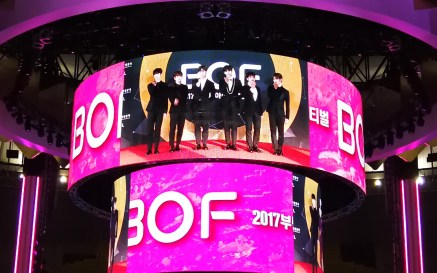
After quite a bit of shouting by staff at one particular area of fans the main event began with the big round screen in the middle introducing the hosts and groups on the red carpet. (We had seen the red carpet in the distance as we waited in line, but when a few people from our group went to try and get closer they were shooed away.)
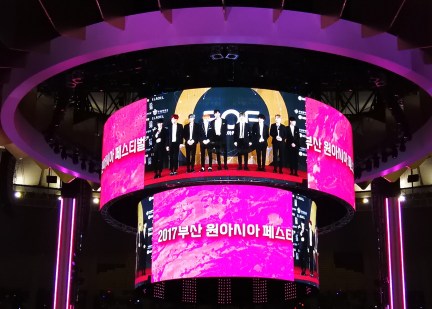
The main host for the evening was actor Nam Goong Min who looked very dapper in a white suit. There were also presenters and guest speakers who spoke occasionally throughout the show, but that was to be expected as it was the Opening Ceremony concert for the festival. Unfortunately the longer we waited the colder we got. Some people were smart and had brought blankets, which I’ll probably do in future.
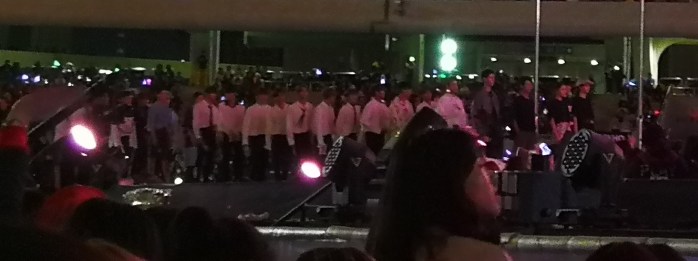
And then we heard the crowd over to the left of us, and there they were. All the groups were lined up to walk onto the center stage.
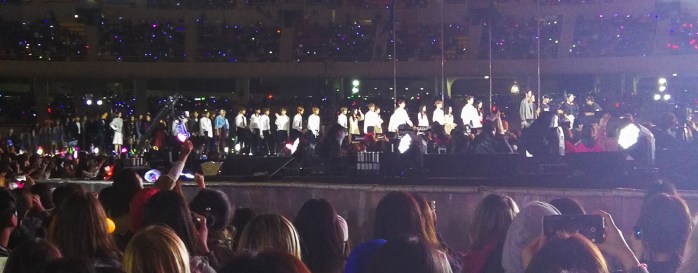
The whole stadium started cheering, it was quite incredible, and suddenly I wasn’t quite so cold any more.
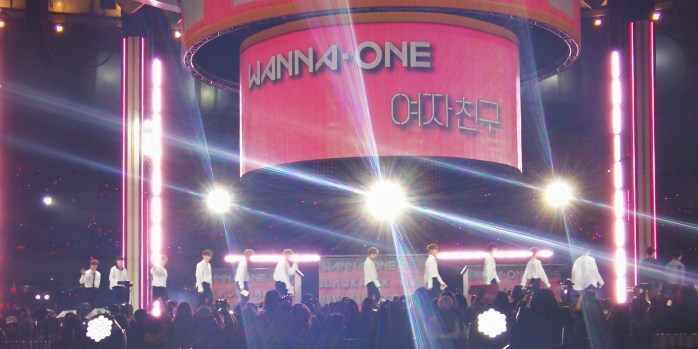
They formed two lines with one group circling left around the stage and the other came right, and right in front of us.
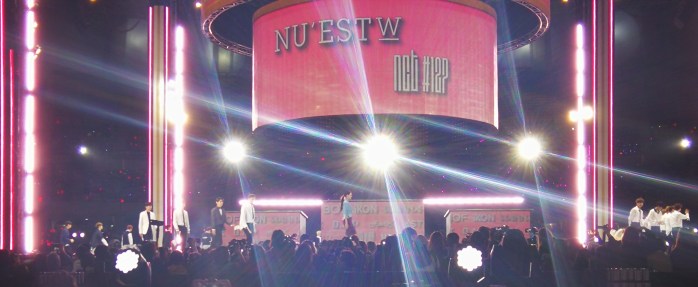
There were loud cheers as fans spotted their favorites walk on stage.
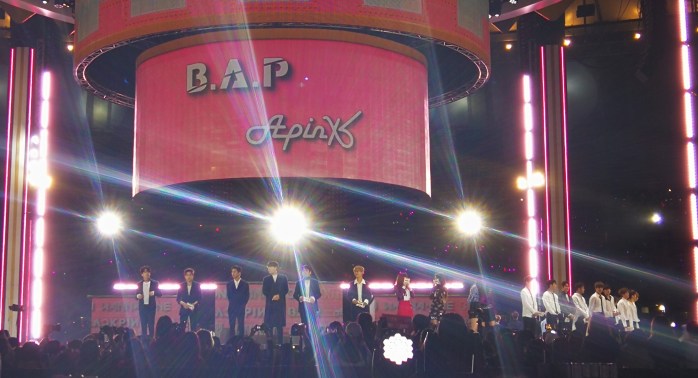
We could see Wanna One, Nu’est W, Black Pink, BAP, and Momoland. We couldn’t make out who were after them though. It was nice to be able to see so many idols in one place.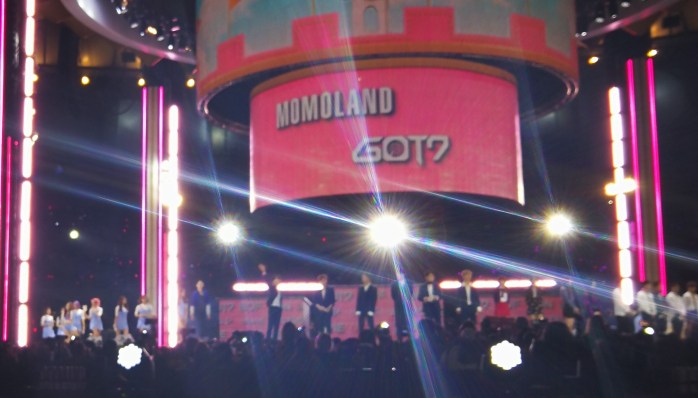
After a little while of waving and making hearts at us the artists all left the stage and the excitement rose once again as we waited to see who would appear first.
I’ll continue with Part 2.
Have a great day everyone.
You may also like Taeyang White Night Concert In Dallas, MonstaX Beautiful In The USA, and Wild Kard 2017: The First Tour In America.
Please do not copy or use without permission and accreditation. All photo credits to Elizabeth and Debora Marzec.
Eating at Gwangmyeong Traditional Market.
Gwangmyeong Traditional Market is probably the most famous of Gyeongg-do’s three major traditional markets and a great place to explore if you’re ever in the area. It is the 7th largest traditional market in Korea with over 400 shops and stalls. We had already visited Gwangmyeong Cave and Chunghyeon Museum earlier in the day and were looking for somewhere interesting to eat.

We walked down narrow streets overflowing with interesting shops and restaurants, but pushed on towards our goal.


Ken had heard of a place in the market itself that had been mentioned by the TV show, ‘The Nation’s Big Three’ which asked locals to recommend the best places to eat in their areas.
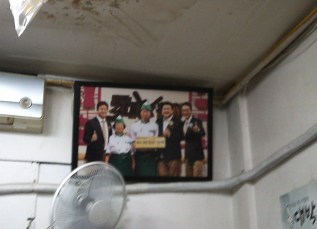
When we found it, it had the cooking area facing the market so you could see and smell what was cooking and 3 tables squished in a tiny area in the back. A few locals were already there and then a large group of male hikers came in soon after us so the place was packed. We were the only females and the only caucasians so people were a little interested in our food and drink choices, and how well we could use chopsticks. 
They even had a laugh when they realized we were drinking makgeolli, but they were drinking it too and a lot more than us so the tiny place was soon full of noise and laughter.


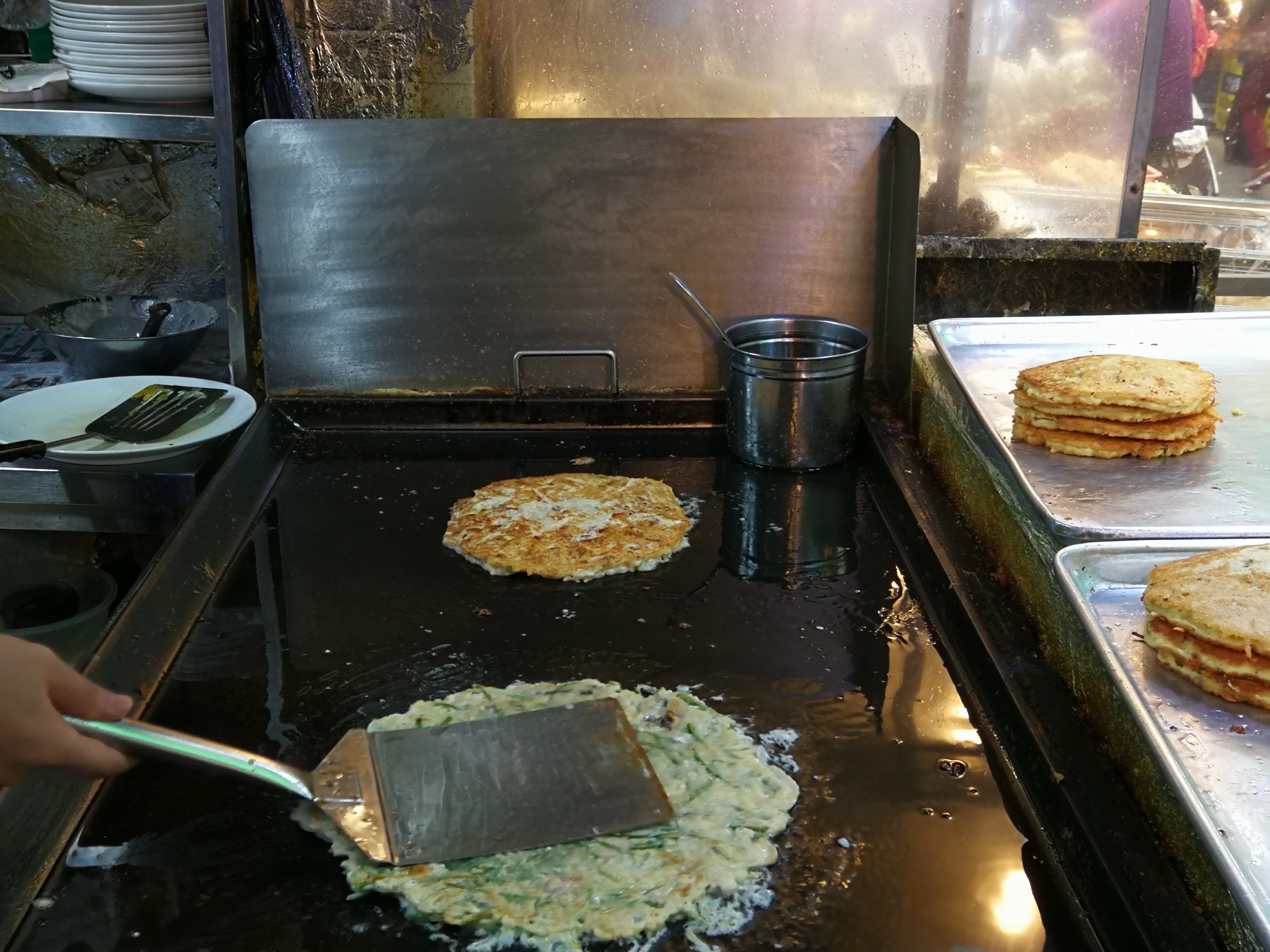
Our ‘pancakes’ were cooked fresh for us, with the seafood one being ready first followed by the potato one. (As you can see these are not like American pancakes, but that is the easiest way to describe Jeon.) Both looked amazing and were very tasty. They were served with onion pickles and kimchi which both added a little kick. Two pancakes were more than enough for the three of us and we left full and happy.


Each place we went Ken made sure to order us a locally made drink, whether that was beer, wine, soju or makgeolli, which meant that by the end of our trip we had tried quite a few regional types of makgeolli all of which were quite different. As soon as I can find a local shop with more than a couple of choices I plan to explore more varieties of makgeolli to see if I can decide on a favorite.
 If I understood correctly the restaurant has been in business for about 35 years and is well known in the area. ‘Grandmother’ began it but it was her son in charge the day we were there.


Full as we were I couldn’t resist the Hotteok a stall a little bit further down the way was making. One of my favorite desserts/snacks I try it pretty much everywhere we go. It was hot and delicious.


You can get to Gwangmyeong Traditional Market using the Seoul subway line 7 to Gwangmyeong Sageori Station.

Have a great day everyone.
You may also enjoy Foodie’s Delight:The Street Food Of Korea, Korean Salt, and Rice: Feeding Half The World Everyday.
Please do not copy or use without permission and accreditation. Photo credits to original owners Kenneth Kim, Elizabeth Marzec and Debora Marzec.
Jeong-dong Culture Night.
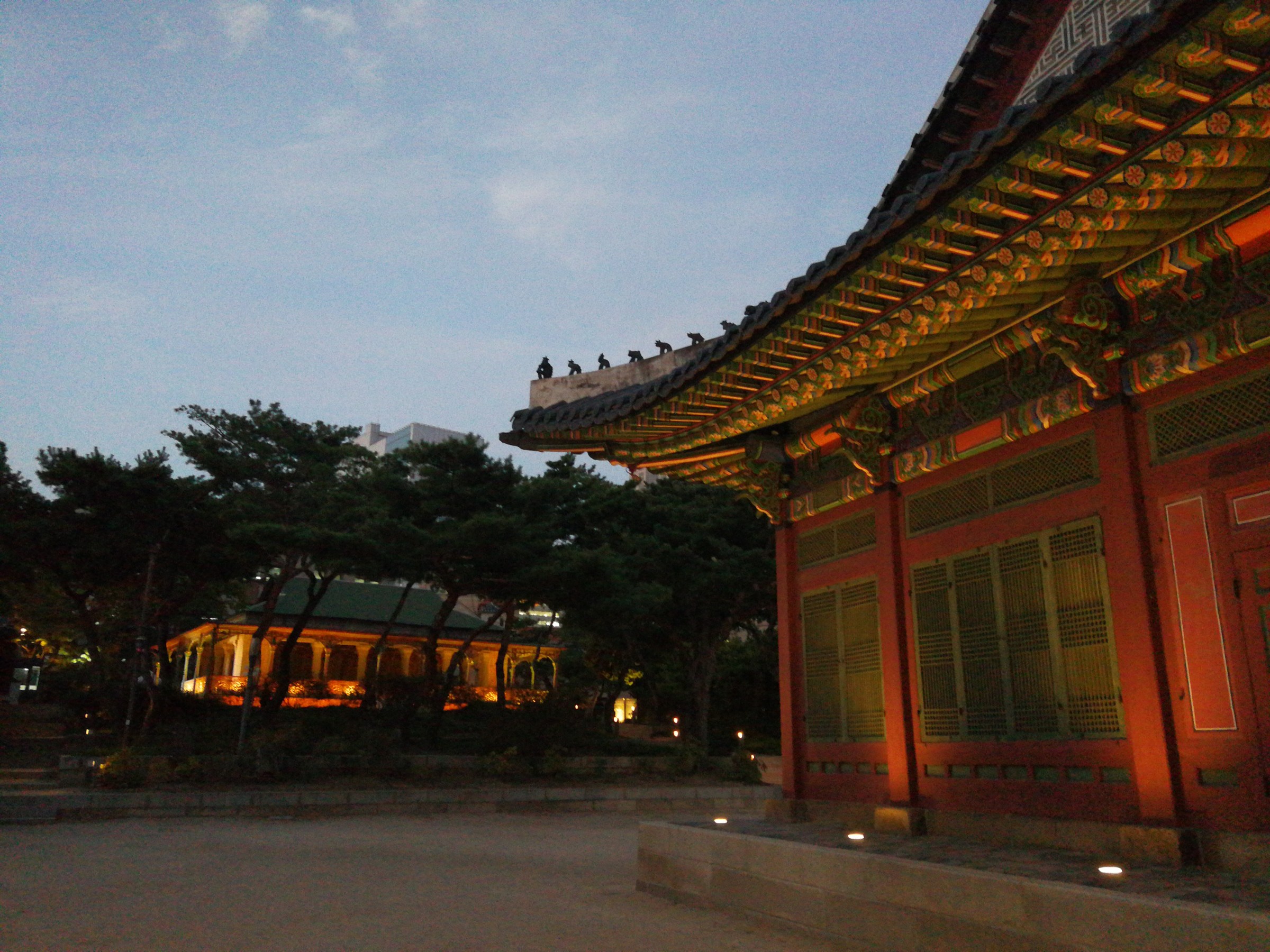
Jeong-dong is neighborhood in the heart of Seoul. Situated near Seoul City Hall and a short walk from such diverse places as Cheonggye Plaza, Sungnyemun Gate, and Namdaemun Market, it itself is home to numerous places worth visiting. This is especially true if you want to see one of the five Seoul Palaces lit up at night. Jeong-dong is home to Deoksugung Palace, and during the course of the Jeong-dong Culture Night it is lit up for people to visit after dark.
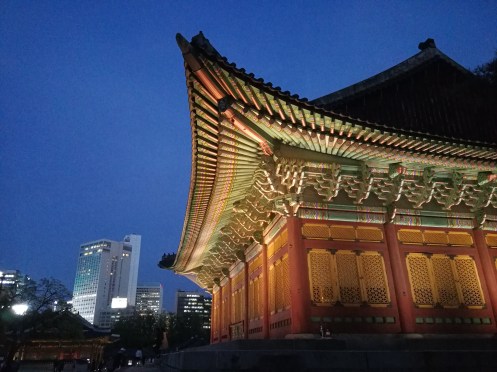
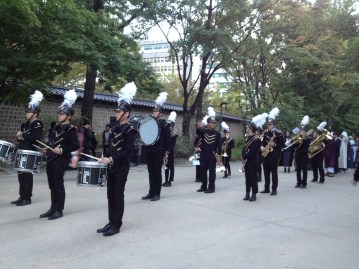
Most of Seoul’s Palaces only open infrequently at night and tickets usually sell out really fast, so we were pleased to find that Deoksugung Palace was going to be open late for festival goers. (The usual fee applied to enter, but it was really cheap.) We arrived at dusk just in time to see a band setting up to play in front of the main gate. Deciding that that would keep people busy we headed inside to try and explore before the crowds gathered.
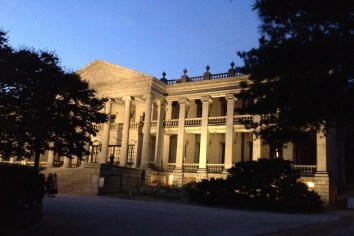
Deoksugung Palace has buildings from different eras and is known for being the home of the last king of Joseon and the first emperor of the Daehan Empire. It is the smallest of the five palaces and has a couple of neoclassical buildings built around the turn of the 20th century. It also had the first western style garden. These are juxtaposed with traditional style Korean buildings. This, plus the fact it is the only one of the five palaces to have modern buildings surround it, makes it stand out from the other palaces.
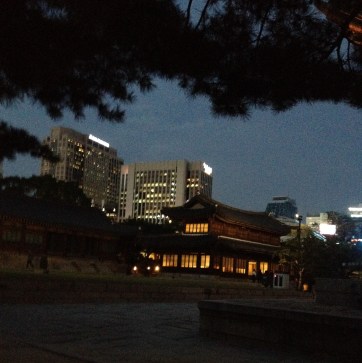
We strolled around as night fell and were amazed at how the buildings changed character in the fading light, some like the Jeonggwanheon seemed to soak up the last rays of the setting sun and glow in the gloom. The first ‘western’ style building to be constructed in a royal palace it was built to overlook the garden.
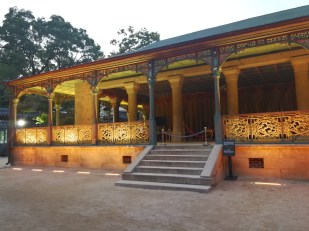
Other building took on a more somber appearance.
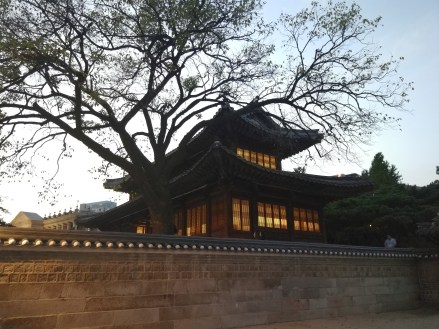
A few of the buildings had art installations set up inside which changed the mood yet again and made for an interesting addition to the buildings themselves. All the art used light in some way which made for perfect night time viewing.


We noticed that people were beginning to gather so we went to see what was happening and found a stage set up for what looked to be a concert. We hung around for a bit but eventually wandered off as there was still too much yet to see.
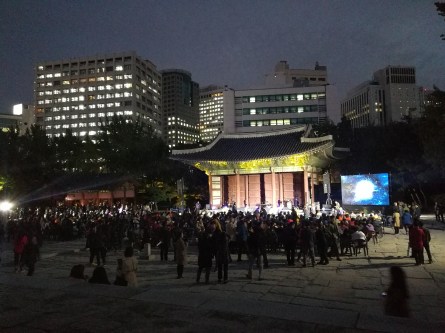
The outside wall to Deoksugung Palace is famous in Kdramas, and just in general, for being a street for romance. Known as the Stonewall Road it has appeared in many Kdramas. Lined with gingko trees and with little traffic it is a pleasant place to stroll. Because of the festival, however, it was teaming with people. Lined with numerous stalls selling handmade items my daughter was able to buy a couple of sets of earrings and a necklace that were really lovely. We didn’t get any photos for a while because we were too busy looking at all the neat stuff.
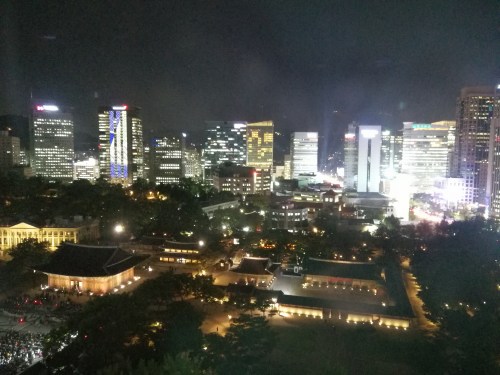
As part of the Culture Night some other places stayed open late and we headed to the Jeong-dong Observatory located in a nearby building. I wasn’t quite sure what to expect for an observatory in the center of a major city. It turned out to be a viewing area located on one of the upper floors that looked out over Deoksugung Palace and as far as City Hall and surrounding buildings. We obviously were there at night so I’m not sure how far you can see on a clear day. There was a small cafe so you could take some time looking at the view. It was cool being able to look down on the Palace and it would be a nice quick break if you are already in the area.
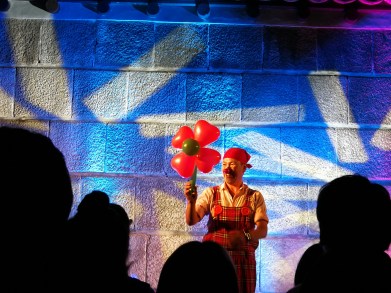
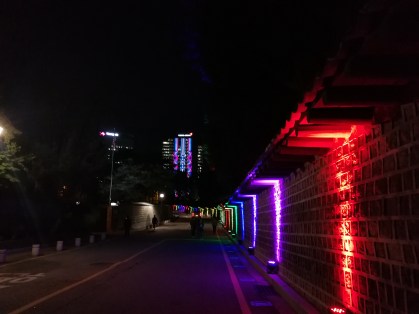
Once back at street level we continued walking and browsing along the very pretty Stonewall Road lit by colorful lanterns and discrete floodlights, stopping every now and again to shop or watch street performers. The balloon guy was particularly good and had a large crowd mesmerized by his creations. We didn’t get a photo of his best work as we were too busy working out how he could make balloons spin inside larger balloon. Some of his fantastic animals were amazing.
Another place that was open was the Seoul Museum of Art housed in what was once the Supreme Court of Korea building. Now only the facade remains and the interior is a completely modern art museum. We visited on a different day when it was less busy. It has various changing exhibits so it is worth checking out each time you’re in Seoul.
Continuing up the street we saw multiple western style buildings which are holdovers from when this area was known as the “European Quarter” as this is where the first westerners were allowed to settle in Seoul in the late 19th century. You can see the buildings of the first Methodist Church in Korea, for the first modern school, as well as for Ewha the first school for girls. Ewha schools and university are still considered among the best in Korea.
Foreign Embassies still dot this area, as does a small stretch of cute cafes. Once you reach the end of the street you come to a busy street that jolts you back into the 21st century. This is where you can choose to return back down the quaint Jeongdong-gil or cross the busy street to get to Gyeonghuigung Palace and the Seoul History Museum. We chose to return the way we had come and visited Gyeonghuigung Palace and the Seoul History Museum another day. However once we reached the little roundabout near the Seoul Museum of Art we took a left turn to follow the Stonewall street a little further.
This less well travelled route took us past the US Ambassador’s Residence and the HQ of the Korean Salvation Army where they had set up some activities for the Culture Night. My daughter got some free cotton candy and chatted with some of the young helpers who wanted to practice their English.
By now we were really quite tired with jetlag dragging at our senses, so we headed off home. We had a really nice evening at the Jeong-dong Culture Night and if you’re in Seoul for the next one make sure to go. Otherwise take some time to just check out some of the cool places to visit in the Jeong-dong neighborhood.
Have a great day everyone.
You may also enjoy Banpo Rainbow Bridge, Korean Games, and My Favorite Place To Stay In Seoul.
Please do not copy or use without permission and accreditation. Photo credits to E and D Marzec.
Chunghyeon Museum, At The Ancestral Home Of Ori Yi Won-ik.

There are many large and beautiful palaces and temples in Korea all of which are worth seeing. Hanok villages abound, and there are also Folk Villages where buildings from different eras and places are built, or collected, so that you can see how all classes of Koreans lived in the past. However, there’s another interesting option, and that’s to visit a Jongga. A Jongga, or Jongtaek, is a large family house that has been passed down from eldest son to eldest son for generations. It is also a bit more than that; it is a spiritual home to multiple descendents; a symbol of a family’s traditions, past, and ancestors; a maintainer of some Confucian ideals, heritage, and beliefs; and a balance to some of the excesses of the modern world.

Chunghyeon Museum is one such place. It was the home of Ori Yi Won-ik (1547-1634) and his descendants and is still cared for by family members. In this case thirteenth generation descendent of Yi Won-ik, Dr. Lee Sung Kyu, and his wife Ham Keum-ja who we were lucky to meet, albeit very briefly. Situated in Gwangmyeong it is open to the public on Saturdays and by reservations at other times. It is easily doable as a day trip from Seoul either by subway and bus/taxi, or by KTX and taxi.

Small enough to be intimate, it actually covers a fairly large area to include a shrine, the site of a confucian academy, a couple of small pavilions, multiple graves as well as the main buildings. The museum houses multiple Provincial Treasures as well as a National Treasure in the form of the portrait of Yi Won-ik. It is quite incredible that one family managed to save so many treasures for so long, especially considering the number of invasions, forced colonizations, and wars that Korea has suffered over the years.
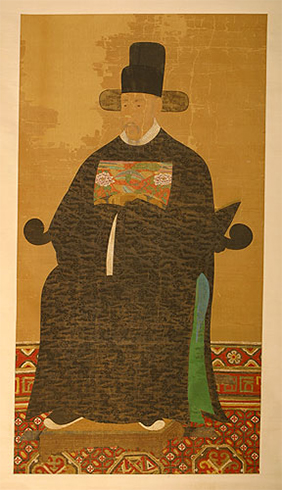
The museum houses multiple portraits as well as family and official written documents. Many make interesting reading as they record details of life in 16th and 17th century Joseon/Korea. They also offer insight into many of the customs of that time. Some written from Yi Won-ik to his son are particularly enlightening as to what was expected of a son to his father.

So who was Yi Won-ik that makes a visit to his ancestral home so worthwhile? Well he was a scholar/official who through being a clever and good leader worked his way up until he became a Prime Minister who served three kings, Seonjo, Gwanghaegun, and Injo. At one point he became Commander in Chief of the Army and was instrumental in driving out the Japanese invaders, but it isn’t necessarily these things that made him special. It was more the fact that he was a humble yet upright man. He was said to be kind, and in fact he introduced various reforms that made life a better for the common people. He was a modest and unassuming man who thought that one should be virtuous, courteous, and not afraid of hard work. He was a ‘good and righteous man’ in the old fashioned sense, and the people loved him. He received multiple awards and honors from the King, turned down a few, and received more after his death. He served his nation well and passed on a commitment of service and loyalty to his son and descendents. The fact that they managed to save so many documents and portraits through difficult times speaks well of them too.

Much as I enjoyed the museum and learning about Yi Won-ik I also enjoyed just strolling around the buildings and seeing all the small things that the family had kept over the years.


There were touches that showed that the family still lived there, with houseplants waiting to be watered and ingredients fermenting in jars.


The property was beautiful and the thoroughly enjoyed walking around. The Shrine was pretty, peaceful and lovingly maintained.


The parklike grounds were worth a visit and you can get a brochure at the front gate with a map inside, although when we went there wasn’t an English language one available. Probably because I got the impression they don’t get many foreign visitors. However they have an excellent web site with an English language option.

The house, museum, and grounds were well worth a visit and we thoroughly enjoyed learning about a Jongga family and their famous ancestor.
Have a great day everyone.
You may also enjoy Beolcho: A Korean Tradition Of Maintaining Ancestral Grave Mounds, Korea And The Silk Road, and Korea’s Greatest Hero.
Please do not copy or use without permission and accreditation.
Photo credits to original owners. Image of Ori Yi Won-ik and the one of Seosijason found at official website of Chunghyeon Museum. All other images Elle and Debora Marzec.
Jokbal, A Korean Dish Of Pig’s Hocks.

The journey from Texas to Seoul is long and tiring so on arriving our friend and owner of The Seoul House always takes us somewhere good for dinner. Food with friends is an important part of Korean life, and ‘have you eaten?’ is a recognised greeting among family and friends. Located near Times Square Mall, Yeongdeungpo Underground Shopping Mall as well as a 24 hour Food Street there’s no shortage of places to eat near where we stay. This trip Ken chose Myth Jokbal, part of a small franchise group with other restaurants in the more touristy areas of Hongdae and Myeongdong.

Tired and jetlagged as we were it was pleasant for Ken to take charge of ordering, but if you remember to greet the staff upon entering and point to the photos on the menu you shouldn’t have any problems. Jokbal means ‘pig’s leg’ although it is often translated as ‘pig’s trotters’. Jokbal is boneless and more from the calf/hock area so there is plenty of meat. Part of the appeal for many is the soft chewy skin and fatty bits. These contain a large amount of gelatin and is said to be good for many things including your skin.


Since it goes well with alcohol Ken ordered beer and soju so he could teach us the best way to make ‘somak’. It is more than just mixing the two together, and we had fun hitting the chopsticks just right to make the drink fizz without foaming over the top of the glass.
The Jokbal arrived on a plate piled high with meat and garlic. The smell alone was enough to make my mouth water, and it looked really good too. Other things were brought to the table including the ingredients for us to make our own soup, as well as a large salad and side dishes.
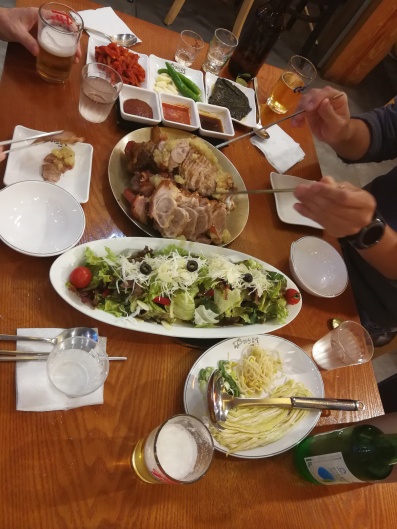
Thankfully Ken took charge of the soup, which actually turned out to be fairly easy to make. Just put the noodles etc into the broth, although you might need to ask for help if you’ve never turned on one of the table top burners before.


We also received steamed eggs as an extra side dish. They were soft and fluffy and delicious.

Laughing at my ineptitude with chopsticks and catching up on what we’d been up to since we last saw each other we had a really delicious meal. The meat is usually braised with spices, such as garlic, ginger, and even sometimes cinnamon, and black pepper. It also may have soy sauce, rice wine, sugar, leeks and onions added, but since each restaurant has their own secret recipe I can only say that the end result at Myth Jokbal was very tasty. We even ended up ordering a second plate.

Jokbal is considered to have many health benefits such as being good for the skin, the liver, and for removing toxins for the body. It is also eaten as a remedy for a hangover.
So if you’re up for trying something perhaps a little out of your comfort zone I can recommend a meal of Jokbal. We went to Myth Jokbal 11-11 Yeongdeungpo-dong 3-ga, Yeongdeungpo-gu about a block or so from the train and subway station, but there are lots of Jokbal restaurants in Seoul with a specific Jokbal street in Jangchung-dong. There are also lots of recipes online if you want to try making it yourself, or if you’re fortunate to live in a big city like NYC you can find Jokbal restaurants here in the States.
Have a great day everyone.
You may also enjoy Foodie’s Delight: The Street Food Of Korea, Korea Without The Chili Pepper, and Green Tea Waffles.
Photo credits to Elle Marzec.
Gwangmyeong Cave, South Korea.
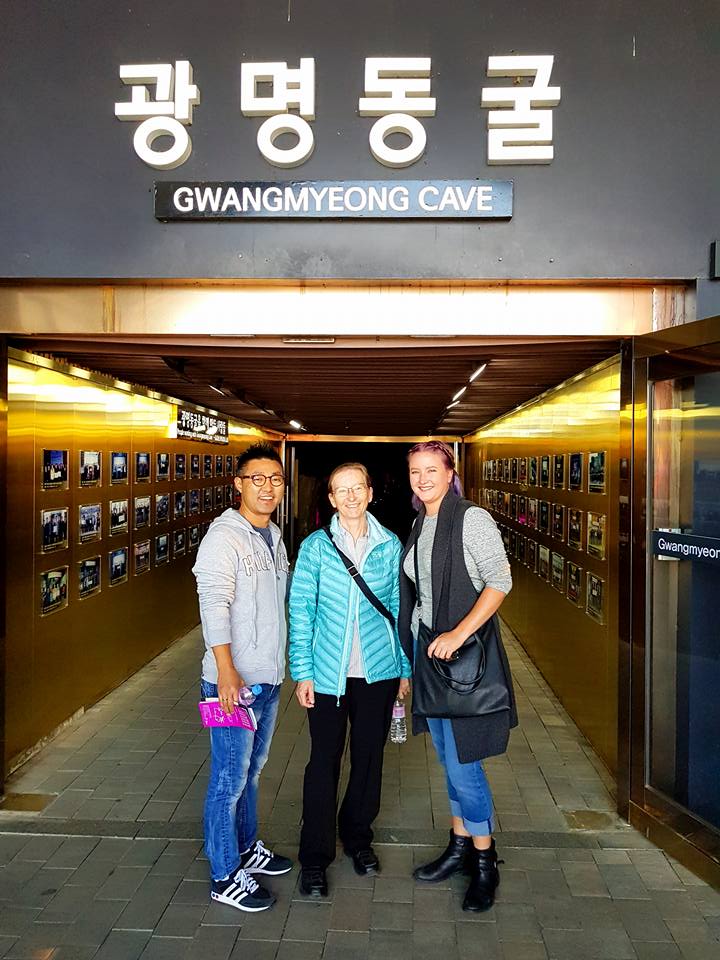
Gwangmyeong Cave, technically located within the Seoul Metropolitan area, is situated outside the Seoul green belt in Gwangmyeong. Although we travelled in a friend’s car you can get there using public transportation. The cheapest way would be by using the Seoul subway and then a bus, or if you have less time, by using the KTX train and taxi. Perfect for a half to full day out from the hustle and bustle of Seoul, Gwangmyeong Cave has quite a few things to offer. Named as one of the ‘Top 100 Must-Go Destinations in Korea’ for 2017-2018 it is not yet heaving with foreign tourists, which makes for a pleasant experience.
Gwangmyeong Cave is actually an old mine, mostly for gold, although they also mined silver, copper and zinc. Developed and used by the Japanese under colonial rule it was the site of forced labor and there is rather poignant series of tableau in one of the ‘rooms’ showing and explaining the abuse and exploitation of the Korean workforce. Being an old mine don’t expect amazing natural cave features such as stalactites and stalagmites, but rather a look for the things that showcase the abilities of man to wrest minerals from the earth. Also expect a lot of walking and steps, both inside and outside the mine.


Before you head down the mine it’s a good idea to use the restrooms near the plaza where there are some interesting art pieces on display. You can also grab a drink or a snack if you need to. Gwangmyeong Cave is probably best viewed as being a combination of underground art spaces, experimental underground uses, and a look at some industrial and social history.

Once through the entry tunnel the tunnel splits and guides tell you which way to go, which is basically a one way route around the mine. There are multiple themed areas and the first was a simple tunnel of lights which was rather cool in the darkness.


The next area was dedicated to art using light. These were better in person, I particularly liked some of the ‘jellypods’.


There were sections along the tunnels containing things such as plant growing experiments using only artificial light, or fish tanks of gold colored fish to prevent long stretches of just walking through a rock tunnel.


Next we entered the 350 seat Cave Art Center where performances and art events are held. We arrived in time to see a moving art piece projected onto the cave walls. With music echoing and the lights sliding over the huge towering walls it was an impressive display. ‘Shows’ vary and you might see laser, or black light shows. Festival events also take place within this space.
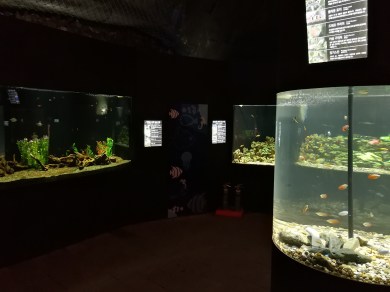
Another room has a small aquarium area using the water from the spring within the cave.

Although quite a few of the areas are on the upper levels of the mine, you do have to go down…..way down, and consequently you later have to climb back up. Just keep this in mind before you decide to go down deeper.


I kinda found this area a bit underwhelming, the walls were painted gold and you could buy gold colored plaques on which to write your wishes, but it was all just a little bit too corny for me. However, don’t let my ennuie stop you from making a wish as who knows, it might come true.
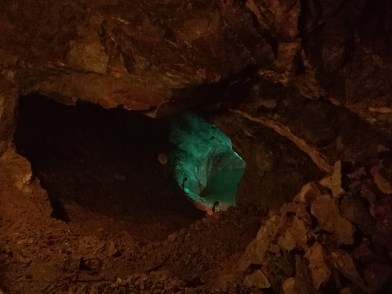
As you near the bottom of the route you can peer down to the underground lake that lies beneath. Even feeling a little like I was in the Mines of Moria, or under the Lonely Mountain I wasn’t really prepared for what came next.


A large open space was filled with Smaug and Gollum and it was quite an impressive sight. The rest of the area had displays and information on other movie monsters and creatures, and although somewhat incongruous was informative and interesting.

An aquaponics system came next and showcased a nice closed system.

Gwangmyeong Cave has been used for various things since it closed as a working mine in 1972 and interestingly 2 uses have been for climate controlled storage. One was for brined shrimp which was stored there back in the day, and more recently for wine. The Gwangmyeong Cave has now become a center for Korean wine from 49 different wineries. Not only is the wine stored there you can also taste and buy wine on premises.


The mine stays at a constant 12-13 degrees celsius which is perfect for ripening and storing wine. The local government has set up a Korean Wine Institute which specializes in tastings, sales, marketing etc so as to assist all wineries in Korea to make their products more known both within and outside of the country.


You may have seen an episode of the Kdrama Drinking Solo filmed here back in 2016.
The cave has other attractions both inside and out, including a restaurant, (reservations required), the exhibition on the mines workings under Japanese rule, an extra charge ‘Horror House”, and a nearby Upcycle Art Center.
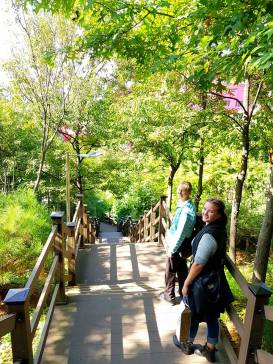
We climbed up these steps to get to the mine, (there is a longer sloping route as an alternative route), climbed down into the mine, climbed back out of the mine and then finally down these steps to the car park, so be prepared. Was it worth it? We thought so, we didn’t know exactly what to expect and it was a little bit of a mishmash of things but we found many things worth looking at and learned some new things along the way. It was also nice being at a tourist site that was mostly filled with Korean tourists and local school field trips, rather than places like Itaewon and the Royal Palaces in Seoul when foreigners often outnumber Koreans. We had a fun morning out of Seoul and think families in particular might find it an interesting place to visit.
Have a great day everyone.
You can find more information at http://www.gm.go.kr/cv/en/en_intro/en_intro0001/en_intro00011.jsp
You may also like Korean Salt, Korea and the Silk Road, and The National Treasures of South Korea.
Please do not copy or use without permission and accreditation.
Photo credits to original owners, Elle Marze, Kenneth Kim, and Debora Marzec.
 KPOP Jacket Lady