KPOP Jacket Lady
KDrama and KPOP Concert Reviews, Travel Tips, Korean Recipes and more
Korean Variety Show Games, part 4. (The Embarrassment Factor.)

There are many Korean variety show games that basically get their humor from the ’embarrassment factor’. This is an almost sure way to make people laugh and increase ratings. Whether or not you choose to play these games with your friends will perhaps depend on their character, as cringe worthy photos are sure to result form trying any of these classics.
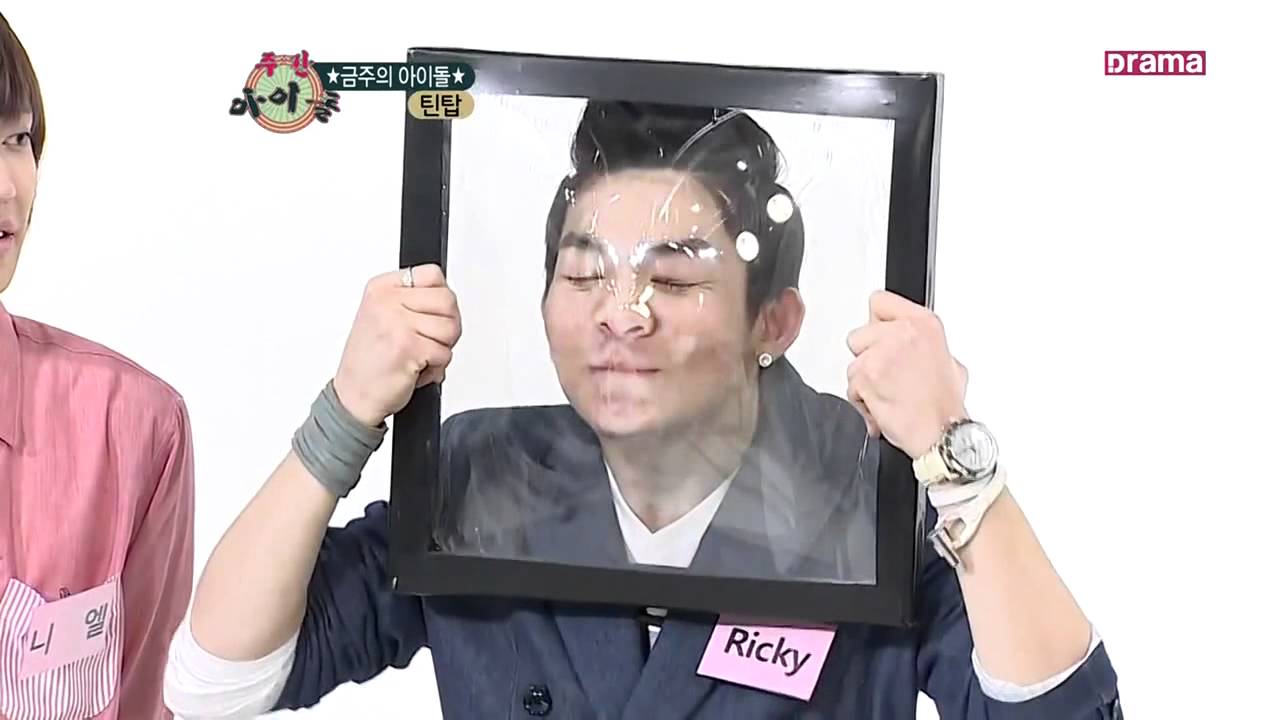
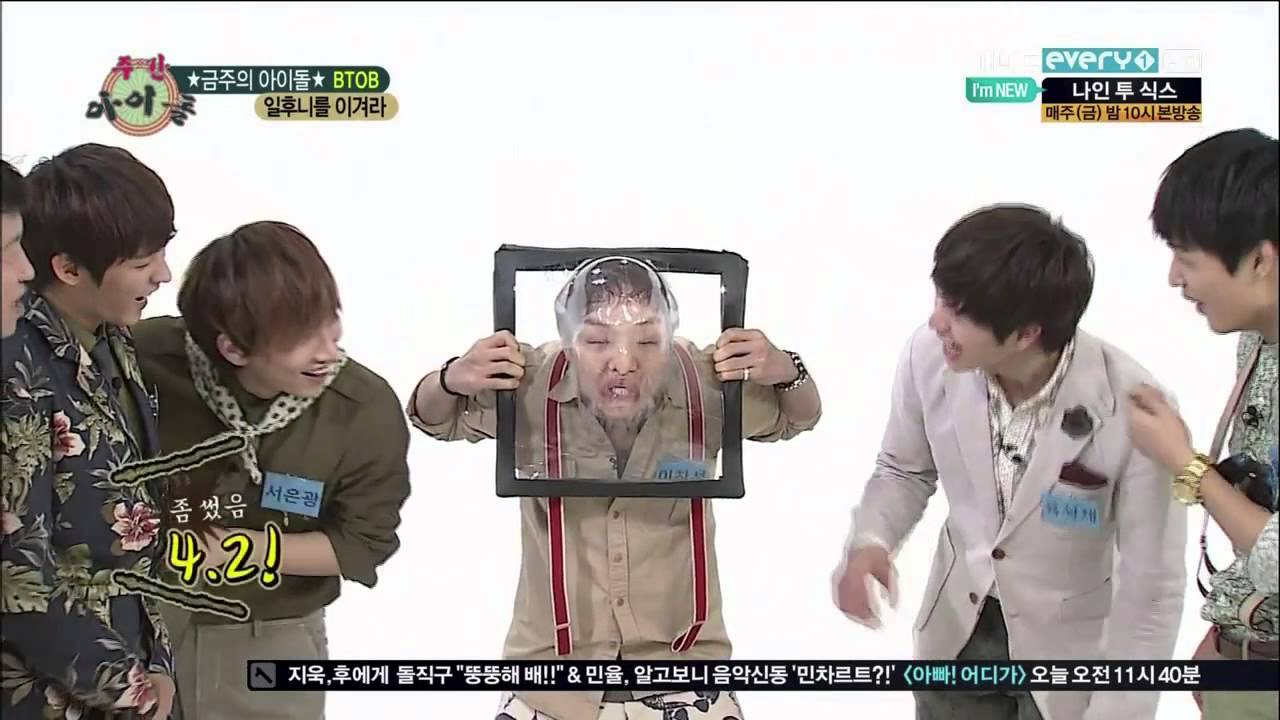
Face distortion is popular way to make people look ugly, weird, or funny, and the two most popular ways are by using pantyhose, or by using plastic wrap stretched over a frame. In the first image, Jack Black and Yoo Jae Suk have place pantyhose over their heads, with the foot tied to a stationary point. They have to push forward until they can get close enough to blow out a candle. With the plastic wrap the aim is to break through as fast as possible, although I think BTOB was really going for just who could be the ugliest.
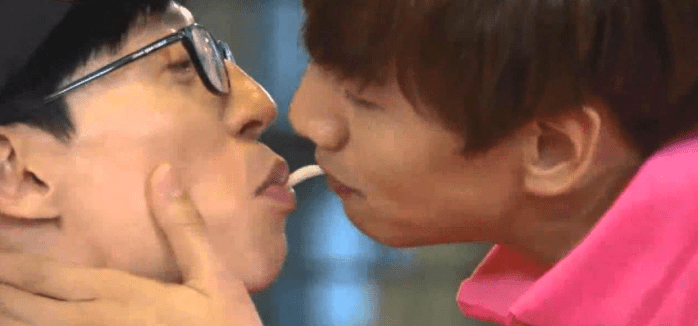
Depending on your perspective and who you are ‘playing’ with, the pepero game can be embarrassing. This is particularly true when female Kpop idols have to play. (They also have to be aware of their image and fan reactions.) Basically two people hold a pepero candy in their mouths and must eat down until the shortest length is left. You can also play with things such as bread sticks. Although embarrassing and cringe-worthy for the players it is a very popular game for watching fans.

Other games that can lead to ruining a carefully prepared K variety show appearance and causing a disheveled and embarrassing look are those that use water balloons, and those that involve mud. Water balloons are used in various ways with perhaps the simplest being catching thrown water balloons in a basket held above ones head. K variety shows have come up with multiple ways to get their cast and guests wet and the one shown in the image above was really inventive. But the most challenging one to recreate would have to be the water balloon game played by Infinite Challenge members in zero gravity/free fall in the Vomit Comet, a reduced gravity aircraft.
Some of my most favorite K variety show games are those played on the vast Korean mudflats, in flooded rice fields, and just generally in mud. There is no way any of the cast or guests can maintain a celebrity image after a game in the mud. Famous actors, idols, sports figures, etc have all finished these games looking no better than drowned rats.

Competing in mud is also very exhausting and strenuous and takes a lot out of the players, but it is definitely funny for the audience. ( I have tried walking on the mudflats of northern Germany and at each step the mud really sucks at your feet and legs. I fell over even just trying to walk.) My first time seeing mud games on K variety shows was back in the days of Family Outing part 1 and I’ve loved them every since.

Korea also has mudflat tours, and mud festivals where everyone can go play games in the mud, with the most famous being in Boryeong.

Sometimes simple games that children play can be embarrassing for a celebrity when they prove unable to do it. Everyone should be able to jump rope, but when one team member lets you down.….
Have a great day everyone.
You may also like Korean Variety Show Games, part 1, part 2, part 3, part 5, The Humor in Mud, Alkkagi, and Jegi Chagi.
Photo credits to original owners.
Please do do copy or use without permission and accreditation.
Kpop Songs For The Holidays.
So this was written last year so some of the information is a little dated, however the song suggestions still hold up. I’ve added another paragraph or two with more song suggestions, and remember you can always post your top Kpop Christmas song in the comments.

It is that time of year again, when thoughts turn to the holidays along with all their traditions and memories of years past. Even if we live someplace warm we often dream of picture postcard scenes of snow, with perhaps a holiday romance thrown in for good measure. Kpop artists have come up with some really nice songs to help get over the winter blahs and help us focus on dreams of winter wonderlands, being with good friends, our families, helping others, and enjoying the festive season.

EXO has already produced a few seasonal songs since their debut with their latest being released yesterday as part of their new EP “For Life”, which is branded as a ‘winter special album’. The new EP has seasonal themed songs such as “Winter Heat”, “What I Want For Christmas” and “Falling For You”. These will have to be very lucky to surpass their “Miracles in December” offering from 2013 which is at over 32 million views on YouTube.

Multiple groups have produced quite successful Christmas songs with Girl’s Generation releasing “Dear Santa” in 2015 with both a Korean and English version. Combined they stand at just over 16 million views on YouTube. Crayon Pop had a really quite silly, but cute song called “Lonely Christmas” which is at the 10+ million plus mark.
To celebrate togetherness at Christmas entertainment companies often release songs with multiple artists recording together. JYP released “This Christmas” in 2010 where he was joined by 2pm, 2am, miss A, and Wonder Girls. This has a very nostalgic MV, since so many of the idols shown are no longer under the JYP label. SM Entertainment produced “Santa You Are The One” in 2011, sung mostly by Super Junior with Henry & Zhoumi, it features other artists in the MV, including SHINee, BoA, f(x), Girl’s Generation, TVXQ and more. Star Empire came out with “Shooting Star” also in 2011 which featured 9 Muses, Jewelry, and ZEA, while in 2012 Jellyfish Entertainment showcased its’ artists such as VIXX, Sung Sikyung, Seo In Guk, and more with “Because it is Christmas.” Then in 2013 Starship Planet made the cute “Snow Candy” with Sistar, Boyfriend, and K.Will, and Cube United released “Christmas Song”chock full of idols such as G.Na, 4 Minute, A.pink, Beast, BTOB and Huh Gak.

Entertainment company releases are often less polished and more along the lines of sharing the holidays with their fans, as are many of the lesser known Kpop Christmas songs. Teen Top’s “Snow Kiss” from 2014 uses a self made MV for their fans which is very cute, and other groups such as Infinite show a softer image and direct their feeling through the camera to their fans with their “Lately” MV from 2011. Yet others use behind the scenes videos to accompany their Christmas offerings, such as MBLAQ in 2011 with “White Forever.”

Bom and Lee Hi’s “All I Want For Christmas” is beautifully sung, as can be expected from two such talented artists, but I’ve never really liked their MV, however if you’re feeling down this Christmas this might make you realize that some people have it worse and cheer you up a little? Otherwise I suggest “Dashing Through The Snow In High Heels” which has to be one of the best Christmas song titles, sung by Orange Caramel with help from NU’EST. It is a cheery, cute song with lots of stuffed animals, silly hats, Christmas sweaters and attractive people. Sure to cheer anyone up.
Update Dec. 2017. So far this year there’s been a few seasonal / winter songs, some somewhat maudlin like Snow from Zion T, featuring Lee Moon Sae, and starring actor Ahn Jae Hong in the MV, and yet others more upbeat such as Twinkle from Lovelyz.

So far though, my favorite song for Christmas so far is White Blanket from The Barberettes. Very traditional and christmassy and totally suitable for playing to a wide and diverse audience. The Barberettes first came to my attention in 2015 when they performed at Kpop Night Out at SXSW. A throwback to earlier times they produce some good songs and sing lots of covers of famous artists.

And of course BTS has just released Crystal Snow in Japan, which is a little more ballad like than their usual songs. (You can find it on Spotify.) While Starship Planet has released a very pleasant Christmas Day.
If you look through Youtube there’s quite a few more Christmas/Winter songs plus playlists to explore. Why not give some of your favorite artists lesser known seasonal songs a try, plus you can always wish them seasons greetings in the comments!
Have a great day everyone, plus an absolutely fantastic holiday season.
Photo credits to original owners.
You might also enjoy Kpop Musings, The Kings of Kpop, Return of the 1990’s Kpop Groups, and Like Dance? Watch Kpop.
Yeomiji Botanic Garden: In Photos.

Yeomiji Botanic Garden, on Jeju Island, is home to the largest greenhouse in Asia. Laid out somewhat in the form of a sunflower it has different gardens radiating out from the central hub. It is the focal point of the much larger outside gardens. Visiting the gardens on a slightly damp morning we decided to head inside to explore before the sun came out and warmed up the greenhouse even more. Free lockers near the entrance were a boon as we could safely store everything we didn’t need while we strolled from indoor garden to garden.


The entrance area itself was a beautiful garden with a pond with ‘islands’ of reeds representing the placement of a constellation of stars in the night sky. In this area they also have lovely borders of flowers and changing seasonal displays.


We moved into the first garden to find a flower garden, which although pretty seemed to be suffering a little from being in a greenhouse in August. Looking at photographs from other people it looks as if this garden is probably far more attractive in springtime.


The flower garden led us to the aquatic garden which had some beautiful water lilies and lotus blossoms that were picture perfect.


The next garden was in some ways the most impressive due to the size and age of some of the cactus and succulents on display, although it was somewhat odd for us to see agave and prickly pear cactus in this setting as they are weeds in our garden back home. Nevertheless they had some very nice rare and unusual cactus and succulents among the more common ones.


After the stark beauty of the cactus we moved on to the ‘jungle’ garden which was lush and very green after the muted tones we had just walked through. Tucked among the foliage there were hidden dinosaur figures, no doubt to entertain visiting children.


Next was perhaps my favorite of the greenhouse gardens, it was one dedicated to tropical fruits and it had all sorts of fruit like starfruit, and things I didn’t recognize growing and hanging from the trees as if waiting to be picked.


By this time we had strolled around and only had the observation tower left to climb, however, we were distracted by a cafe selling ice cream, as well as other goodies.

The central observation tower had clean restrooms in the basement and a glass fronted elevator up to the first observation point. There were stairs if you wanted to go up even higher.


From this height you could not only see the incredible construction of the greenhouse, but the bridge to Cheonjeyeon Falls, as well as views down to the surrounding gardens. On a clear day you can see Hallasan Mountain, the Coast and sometimes even Marado Island.


The outside gardens are quite expansive and cover a large area. If you’re not up to a lot of walking there is a tram that will take you around for an extra fee, but obviously the best way to see a garden is to walk around. The Botanic Garden is divide up into smaller gardens, each with a theme, such as Japanese garden, Korean garden, Italian garden, bog garden, native plants and more.


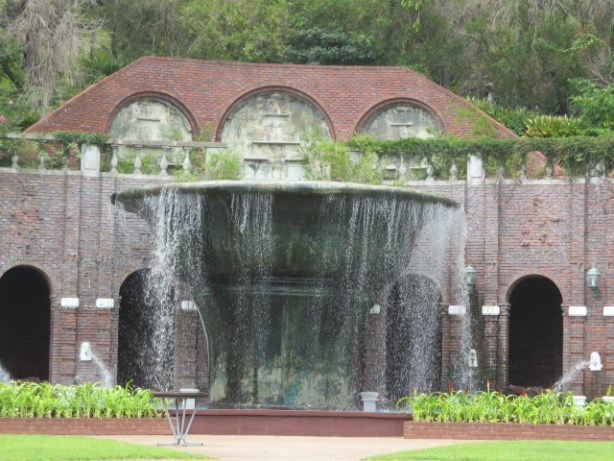
My favorite was probably the bog garden for its simplicity and quiet beauty, the only sound was the breeze among the reeds with the occasional insect buzzing and frog croaking.


If you visit Jeju Island I highly recommend you visit Yeomiji Botanic Garden. It is easy to get to by bus, costs less than 10 bucks to get in and is right next door to Cheonjeyeon Falls, but the best reason of all is that is it one of the nicest gardens I’ve ever visited.
Have a great day everyone.
You might also like Spirit Garden, Halla Arboretum, The Stone Men of Jeju, Ramie: “Wings of a Dragonfly” and Korean Innovations: The Heated Greenhouse.
Photo credits to me. Please do not copy or use without permission and accreditation.
Goblin, Guardian, or God?

If you enjoy Korean dramas you would have to have been living under a rock to have missed the hype for the drama, Goblin: The Lonely and Great God. As of now only 4 of 16 episodes have been released and the response from the audience has been incredible. Today a report noted that it was more popular than Descendants of the Sun, (DOTS) a mega-hit drama from the same writers which aired during the first part of the year.


Korean dramas often add multiple aspects to their stories to include history, mythology, time travel, ghosts, and even inter-dimensional story lines have been popular. Some dramas called Sageuks tend to follow history somewhat more faithfully than most, but Korean writers never seem to let the facts interfere with a good plot-line. So how much of the folk lore in this, my current favorite drama, is based on the traditional supernatural characters that inhabit the Korean mythos? This tale of tragedy, romance, and hope, has at its’ core a Dokkaebi, a Korean goblin. Dokkaebi is usually translated as goblin although it only has a few similarities to the old European goblin, and could perhaps equally as well have been translated as, gnome, imp, brownie, orc, demon etc. Also many folk creatures have changed their characteristics over time, particularly as they began to appear in books, movies and online games. Basically what you think of as a goblin may not have been your parents, or grandparents goblin, just as I’m sure this story will alter our future ideas of what a goblin is and can do.

The traditional Dokkaebi was a mischievous figure, known to have a soft spot for the innocent and those who did good, and to punish those who did evil. A trickster type, he used his magic hat of invisibility to play pranks on people. He is also known for carrying a large club that has the ability to transport items from one place to another. He can’t actually ‘magic’ something into existence, but can make it appear by magically taking it from somewhere else. So for him to give you a pile of gold he has to have taken that pile from someone else, so he’s somewhat morally ambivalent like many trickster gods.
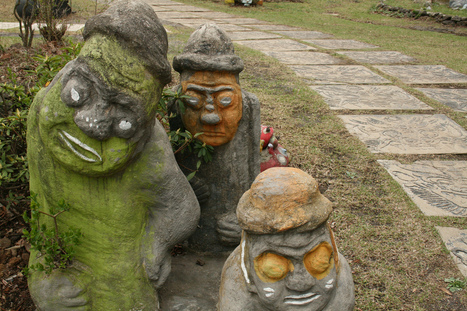
In the drama the goblin, Kim Shin, played by Gong Yoo, has some of these attributes, although oddly it seems like the grim reaper has a hat of invisibility, in reverse, in that humans can only see him when he is wearing his hat. Kim Shin’s sword stands in place of the traditional club, and it can definitely make gold appear and disappear. Also it may also be what allows him to move himself, through doors, to different places. But our drama goblin is also called, ‘protector of souls’ and a ‘god’. He is described as ‘he is water, fire, wind, light and darkness’, not the typical description of a Dokkaebi. So somewhere at the beginning of the drama something happened that didn’t just turn the inanimate sword into a goblin, but gave it the soul of Kim Shin a general beloved by the people and considered a godlike man by them. When after 20 years his faithful and loyal retainer returns to Kim Shin’s death place, God speaks and says that the people have saved his soul, but that because he also killed innocent people he will be punished by remembering all the deaths he caused and to outlive all the people he has loved during his immortal life. Clearly Kim Shin becomes more than a goblin, in fact he becomes more like a guardian angel with a flaming sword type figure. He is more powerful than the grim reaper, he knows who has been reincarnated, he can move from location to location, and the weather and nature respond to his moods, plus he interferes with the lives of humans. He takes on some of the attributes of a goblin, a guardian, and a god.
Some of the other characters are no less interesting. Wang Yeo, played by Lee Dong Wook, is a grim reaper with amnesia who is perpetually gloomy, yet totally dedicated to his job. The Joseung Saja are guides to the underworld and don’t actually kill, although due to a bureaucratic error heroine Ji Eun Tak (Kim Go Eun) fears that he might make an exception in her case to set the books straight. Grim reapers have appeared in other kdramas, notably in Arang and the Magistrate, with their black hats being a defining feature.

Heroine Ji Eun Tak is somewhat of a puzzle and I think we’ll learn more about her powers as the drama progresses. For now, due to Kim Shin saving her/her mother at her moment of birth/death she is not on the list of the living, or the dead, she has the ability to see and communicate with ghosts, can follow the goblin when he transports to another place, and can summon him to her. She seems to me to perhaps, unknowingly, to be a shaman or priestess of some sort. She definitely is not a normal girl.

I feel that perhaps the princess in the first episode also has some future part to play since she was the owner of the ring the granny has later. Maybe they are the same person, because the princess does say ‘I know everything’ and the old granny seems to know stuff too, or are they the 2 sisters the old ghost mentions? Plus there’s a female grim reaper…..puzzles and questions, just enough to keep it interesting. I’m looking forward to each new episode and hope the drama can keep up the plot and character development.

I also feel that although our hero Kim Shin is more than just a traditional goblin, he still retains enough of the Dokkaebi for the terminology to suit him. His playfulness with the water at the fountain in particular did make me think somewhat of the humor of the trickster god.
Have a good day everyone.
You might also like Stone Men of Jeju, Seoul Bamdokkaebi Night Markets, Hwarang, the Flower Boys of Silla, and Is it the Kdrama Actor.
Photo credits to original owners. Please do not copy or use without permission and accreditation.
My Favorite Place to Stay in Seoul.


Choosing a place to stay while on vacation can be a stressful decision since there are so many variables to consider, things like location, expenses, facilities, safety, and more, which is why I’m happy to share my favorite place to stay while in Seoul. The Seoul House run by Kenneth Kim has worked out perfectly for my past two visits to Seoul. (Edit we have been for our third stay recently.) Just across from Times Square Mall, one of the largest malls in Seoul, it is located in an area called Yeongdeungpo, just south of Yeouido and the Han river.


Times Square Mall is literally across the street from The Seoul House apartments which makes it really convenient for things such as E Mart, Kyobo Book Store, restaurants, and it also has a movie theater with the largest permanent 35m screen in the world. It also has an Electro Mart, which is a store geared towards men that even has a bar inside.


Eating out in the Mall in Korea does not have the same stigma as in the US and there are some very good restaurants in the mall, including one with really tasty food run by the chef of YG Entertainment. There’s lots of good snack and ice cream places too. The green tea ice cream was amazing, as was the raw milk ice cream.


At popular times there are often lines outside restaurants of people waiting their turn to dine. This mall is also famous for being the site of the very first episode of the Korean variety show, Running Man.

Times Square Mall also frequently holds Kdrama and Kpop events, which is really cool if you happen to be visiting during one of these events.


If you want to try a traditional Hanok restaurant there is one about 2 minutes from the apartments and it is really nice as it is tucked away and almost unknown to foreigners so you can get a real Korean meal and experience. (Edit on my 3rd and most recent trip it was temporarily closed. If you want to eat in a traditional Hanok restaurant I’m sure Ken can recommend one.)


Then about a minute further away is a ‘Food Street’ which is open almost every hour of the day and night and has hundreds of restaurants to chose from.


The food street also includes a restaurant run by the father of one of the members of CN Blue. Hwang’s Eel Restaurant is owned by the drummer Kang Min Hyuk’s dad.

Then of course there’s all the nearby street food vendors, which are perfect for a quick snack on the way to, or from, the subway stations.


The mall also connects through the underground level to one of the three nearby Subway lines.(Lines 1, 3, and 5.) The Seoul House apartments are located near three different subway lines all 10 minutes walk away or less. These lines take you to most of the tourist locations with a minimum of line changes which makes getting around a little easier. There are also numerous bus routes nearby and a favorite waiting place for taxis is just in front of the apartment building. The airport bus stop is about a block away and Ken will wait for you there and help you to your room. You can also ask him to arrange for a taxi for you from the airport which is much better than catching your own as he can give directions to the driver in Korean. Remember that GPS doesn’t really work well, if at all, in Korea because of the S. Korean Government not giving Google access due to security concerns over N. Korea being able to use that information for military purposes. (hint, write down where you want to go in both Korean and English just in case you need to ask for help finding somewhere.)

If you need help above what Ken provides there is a brand new tourist information office right across the street. You can see it from the apartment windows.

Seoul has a large proportion of things underground, particularly shopping centers which often also serve as access routes between different subway lines. (hint, be aware that even at transfer stops between subway lines you may have to walk long distances.) Yeongdeungpo Underground Shopping Center is quite large and has a multitude of stores to check out. Since this is not one of the shopping centers favored by foreign tourists you may be able to find some good prices. Remember you can bargain to get the price down a little at some places, this works best if you are polite and try to at least say a couple of words in Korean. (hint, Koreans say hello and goodbye when entering and leaving places and it is a good idea to try and do the same.)

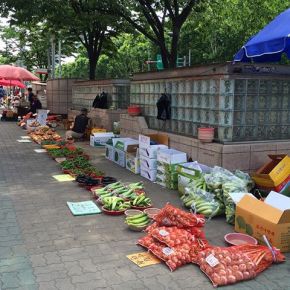
And then if that isn’t enough there’s also a traditional market about 5 minutes walk away, and a street vegetable market on the way to Mullae Subway station.
If you get tired of all the hustle and bustle there’s even a garden tucked in behind Times Square Mall as well as a roof garden.

Or if you need something even more relaxing there are a couple of spas/jjimjilbangs in the neighborhood. My daughter tried one with her Korean friends and they had a fun time, but obviously no photos.


The apartments themselves are quite small compared to those found in much of America, except maybe NYC, but they have everything you need, including washing machine, wifi, TV, microwave etc. Ken even provides bread, jam, and coffee packets so if you want you can have something to eat before you head out in the mornings. Personally we tended to grab street food on our way out, or stopped at one of the nearby amazing cafes for breakfast. The bathroom is Korean style in that the shower is not separate from the rest of the bathroom except by a curtain, so remember to wear your bathroom slippers when you enter. (Ken provides these for you.) We usually stay in the apartment that sleep 4 and you can check out all the photos of the room at http://www.theseoulguesthouse.com (hint, notice the steps up to the loft bed, the apartments are not necessarily suited for very large or handicapped people, and these apartments are obviously built to Korean standards not American ones.) Since the apartment sleeps four it works out to be an economical option for a family or group of friends, plus Seoul is such a fantastic place you shouldn’t be spending much time there anyway.
The door to the building and to the apartment work by a keycode, the street is well lit, a fire station and hospital are nearby and we never once felt uneasy it the area, even when coming home in the wee hours of the morning.


But the major reason we stay at The Seoul House is that it has become our home in Seoul. We feel comfortable and safe there and enjoy everything in the surrounding area, which has a much more local neighborhood feel than some more touristy areas such as Hongdae, Itaewon, or Gangnam, yet it is easy to get from it to all the tourist areas and must see sites. In spring time it is close to one of the biggest cherry blossom festivals and not too far away from KBS if you are lucky enough to get tickets to KBS Music Bank. The biggest reason, however, is our host Ken. Ken makes sure to greet guests at the bus stop from the airport, or help arrange a private taxi, he guides you through all the practicalities of the apartment and then spends at least 30 minutes showing maps and suggesting places to see. He has a lot of experience of the local area and showed us around the mall, especially to E Mart for our groceries and necessities, and recommended restaurants, ice cream shops etc. He has become like family to us and we have occasionally gone out to eat with him. He makes sure you have a transport card and explains how it is used, and gives directions to the closest subway stations. He also gives you his phone number in case of any difficulties that might arise during your daily adventures. He also helps book tours and events, and pretty much does everything he can to ensure you have an amazing and memorable trip to Seoul. Many guests, like us, are repeat visitors to The Seoul House and wouldn’t dream of staying anywhere else.

So if you’re planning a visit to Seoul consider staying at my favorite place. If you want a more personal experience you can also stay at their private home which I would definitely do if I travel solo to Korea sometime in the future.
Have a great day everyone.
You may also like to check out KBS Studio Tour, Kpop Musings, Korean Tea, A look at Hongdae, as well as other posts.
Please do not copy or use without permission and accreditation.
Photo credits to original owners. To Kenneth Kim, to Running Man /SBS, with no 13 from pinterest, to Elle Marzec and myself.
Korean Variety Show Games, Part 3.

Once again I’m writing about more Korean games that you might have seen on Korean variety shows. To catch up on which games I’ve already discussed you can check out part 1, part 2, and individual posts on favorites such as Alkkagi, Ddakji, Jegi Chagi, and more. Some games require more, or less, equipment and for now I’ve focusing on those that can be played at home or in the park with minimal effort.
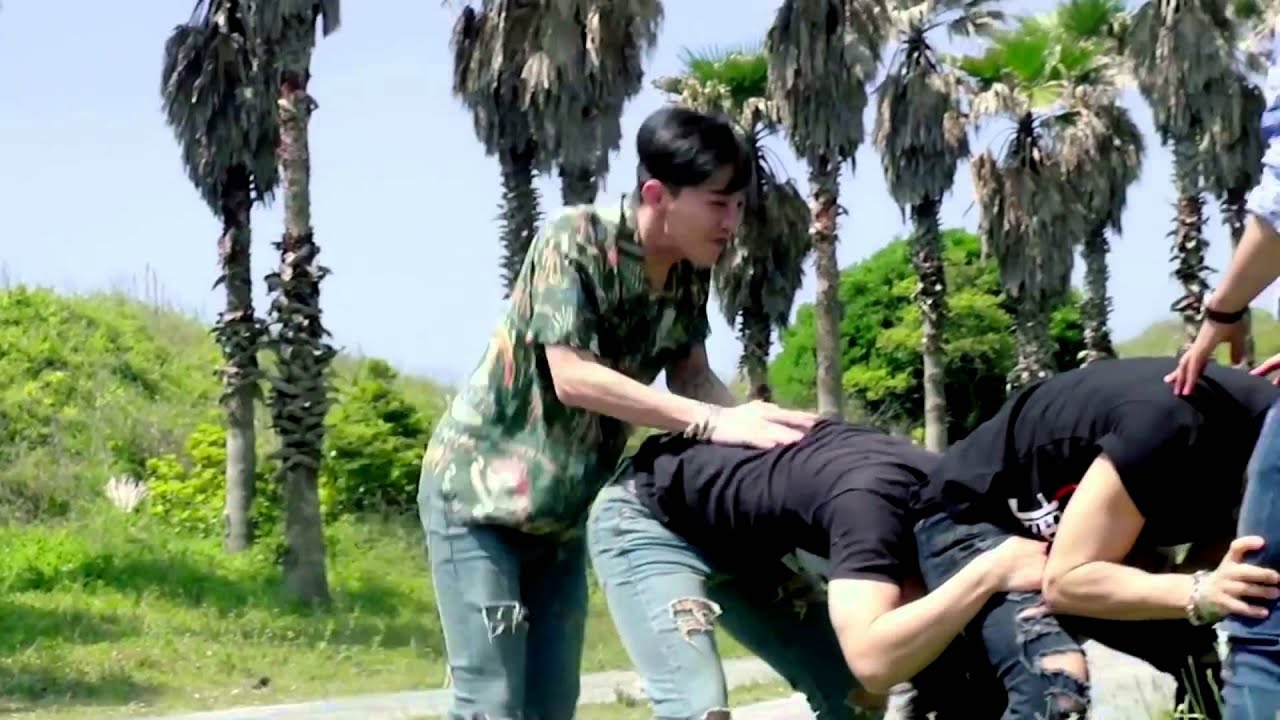
One such game is a variation of, or related to, Leap Frog, a game I played in the school playground when I was a child. It Korea it is called Mal Dduk Back Gi, and the aim is not to leap over the other person, but to land on them with enough force to break the ‘chain’ of players on the opposing team. This game is played in other countries, and perhaps, even in the UK, and it just wasn’t popular at my school. Teams can be of up to about half a dozen players and it is a game for 2 teams. One team sets up with a player with his back against something solid such as a wall or tree, and the remaining players on that team bend over and tuck their heads up against the butt of the player in front of them trying to press their shoulders as close as possible to avoid neck injury. These players, often known as horses, must hold tight and to a certain extent lean in and push themselves forward (this is why the upright player must have his back against something solid) to form a strong platform which the other team will attempt to break.
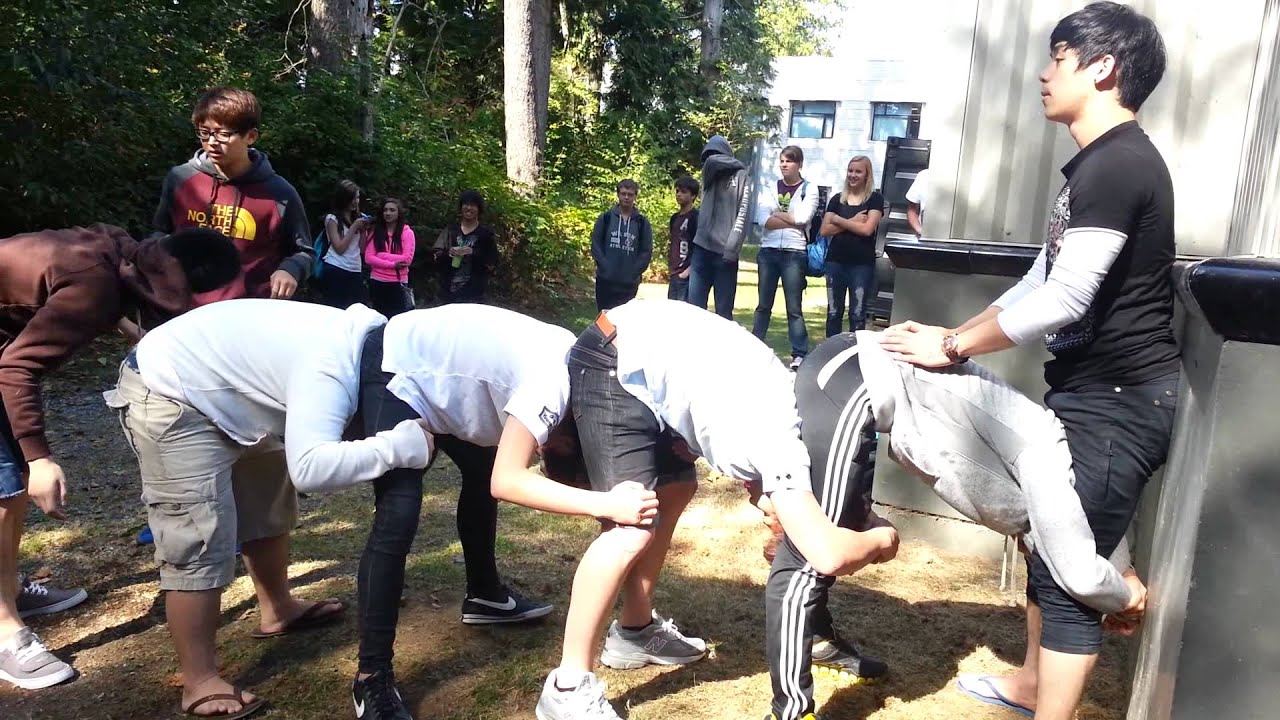
The opposing team must now run and leap onto the backs of the first team scooting forward to allow enough room for all the team to land on the backs of the ‘horses’.

The horse team wins if they withstand the leaping of the riders, or if the riders fall off, or if the whole team cannot fit, because they haven’t all scooted far enough forward. The ‘riding’ team wins if they collapse, or break apart the ‘horse’ team.
You can see this game played on XMan and other variety shows, although usually it is played by younger people and so doesn’t appear very often. If you look closely at the Big Bang MV We Like To Party, you can see them playing this game at around the 45 second mark. I know I’ve seen it played by other idol groups, but I can’t track down any images. (If you know of any please feel free to share in the comments, thanks.)
Both Leap Frog as well as a game that looks remarkably like Mal Dduk Back Gi can be seen in a 16th century European painting by Pieter Bruegel. According to accounts from the time a very similar game was played in medieval France, where it was known as ‘cheval fondu’ (skinny horse), Germany, where it was called ‘faule brucke’ (rotten bridge), Sweden, and Hungary, but I still don’t know its’ name in English.

Although this game looks like a lot of fun, it like many other active games, should be played using caution and common sense.
A favorite game of almost all Kpop fans has to be the ‘paper’ kissing game. There’s no shortage of videos online showing various idol groups participating in this most suggestive and cringe-worthy of games.
For those new to Kpop idol ‘fanservice’ the members often must play games and perform cute tricks to please their fans, and this game is probably the most popular, with few groups managing to escape having to play this at least once in their career. You can watch multiple groups play this game though fan compilations or watch just your favorites. Over time the paper has gotten thinner, (I used to play a version of this game with playing cards quite a few years ago), and they are even using thin plastic sheets as well.
Now I’ve gone and distracted myself, and may have to take a break to watch a few compilation videos.
Have a great day everyone.
Photo credits to original owners. Please do do copy or use without permission and accreditation.
Horseback Archery In Korea: A Traditional Sport.

Over the past couple of decades archery from the back of a horse has seen a revival as a sport and recreational activity. Countries all around the world, both those with and without a tradition of the practice, have started holding competitions and displays of this challenging and very watchable sport. Korea, which has a long history of archery use, is one of the leading advocates and practitioners of the sport.

Archery was probably invented at different times and in different places around the world. It was one of the pivotal inventions of humankind, along with things such as the use of fire, the beginnings of agriculture, the domestication of animals, and the invention of the wheel. It is unknown when the first people realized the the advantages of using a bow while on horseback, but many early cultures and civilizations dating back thousands of years hunted, and fought, with bows from horseback. (See Archery in Korea.)

One of the earliest images of horse archery in Korea is from the Three Kingdoms Period when ‘Korea’ was much larger, and held land further into what is nowadays China.


The wall murals in Muyongchong Tombs in Goruryeo (now in China) date from the 5th century CE and show scenes of everyday life for the rich. The fact that one panel shows men hunting deer and tigers means that it was an important aspect of their lifestyle. The mural shows skilled archers riding expertly after their quarry. I have no doubt that horse archery had been practiced in this region long before this mural was painted since it is shown as an aristocratic pastime. Other murals in the tomb show activities such as dancing and dining in keeping with the entertainment theme.

Although only the rich and the military could afford to keep and train horses, hunting from horseback no doubt evolved from the need, by nomadic peoples and traveling armies, to hunt for food while on the move. Hunting from horseback not only provided food and furs etc, it helped build skills for warriors, as well as being an enjoyable pastime for the wealthy. Owning a horse, paying for its upkeep, outfitting it, and training it was beyond the reach of the average person in most cultures.The image below is from an ancient tomb in Dukheung-ri and shows a horseback archery competition, which without wealth and leisure time would have been an unlikely pastime for any but the military, or the rich.

The Samguk Sagi, published 1145 CE, chronicles many aspects of Korea’s even earlier past using historic records and sources, some of which are lost to us today. In it there are accounts from the Three Kingdoms Period, (57 BCE – 668 CE) with one from Baekje stating that being good at horseback archery was a good thing and an important criteria for evaluating a warrior, or king’s prowess in feats of arms. It also notes that in Shilla government officials took part in horseback archery competitions with prizes being awarded by the King, and that in Goguryeo hunting competitions were held every Spring and Fall with winners being able to advance to being a ‘brave warrior’.
Horse archery continued to be an important part of Korea’s history and culture, with some ups and downs in popularity, right up until the arrival of westerners and their weapons to the then ‘hermit’ kingdom. The 19th and 20th centuries saw many once important aspects of Korea’s heritage fade away due to many outside factors and influences, including the Japanese occupation of 1910-1945. Fortunately Korea has been working hard to restore and revive many of its’ ancient traditions.

We know that horseback archery in Korea can be definitively be proved to date back at least 1,500 years, with a high probability that it dates back to a much earlier time, but its’ resurrection only dates from around the late 1990’s when a display of ‘Mogu’ (aiming at a moving target pulled behind another horse) took place at a Korean Military Academy. It wasn’t until 2004 that the 1st Hwarang horseback archery competition took place, and 2005 for the first International Competition. As stated earlier many countries and cultures have a history of horseback archery and quite a few of them are a part of the modern revival of the sport. Some countries began their own revivals of the sport at various times during the past century, but it has only been since the turn of this century that there has been an ever increasing interest in the sport. There are two main styles that are most often seen in competition, the Korean, and the Hungarian, although nowadays events are held in many places with their own courses and challenges.
It is hard to compete in international competitions due to the expenses involved in transporting horses long distances, however regional competitions are becoming more common. If you can’t get to Korea to see horseback archery try finding an event near your location. Supporting horseback archery anywhere in the world helps the sport grow and expand. Archery from horseback is an ancient skill that deserves to be nurtured and allowed to survive well into our future. Countries such as Korea are recognizing it as part of their intangible cultural heritage and are taking steps to try and preserve it. Some Folk Villages and tourist destinations have horseback archery shows that you can watch, and more Sageguk and historic Kdramas are showing horseback archery as more young people are learning the skill.

If you want more information on the modern sport you can check out www.whaf.net or www.horsebackarchery.info as well as multiple other online sites. There are also many videos on Youtube about the sport.
Have a great day everyone.
Photo credits to original owners.
Please do not copy or use without permission and accreditation.
Halla Arboretum, Jeju Island.

Jeju Island is well known for its beautiful natural scenery and multitude of native and adapted plants, but if you’re on a quick trip and want to see as many of these plants as possible a visit to one of Jeju’s botanic gardens is a good idea. There are many gardens and nature parks on Jeju that are well worth visiting, some like Spirit Garden are highly maintained and focus on a specific garden style, while others such as Yeomiji Botanic Garden showcase plants not only from Jeju, but from around the world. Halle Arboretum in Jeju-si is a nature park that is more natural and relaxing in its appeal. Easily accessible from Jeju airport by taxi, and with a bit more effort by bus it is a popular destination for both tourists and locals alike.

A large map near the entrance shows where the numerous ‘gardens’ are located and the paths and trails to take to get to the ones you want to see. I particularly wanted to see the bamboo forest while my daughter wanted to see the succulents in the greenhouses. With that in mind we chose a meandering route that also took us through a few other garden and forest areas. The gardens obviously each have a best season to see them so expect to see some looking better than others depending on the time of year you visit.

We were lucky enough to see the lotus blossoms in the ponds in full bloom.
The arboretum (a botanic garden more for ‘woody’ plants like trees and shrubs than for only flowers) opened in late 1993 as a place to preserve, grow, and display the plants native to Jeju Island. It also was built to provide a restful environment for locals and tourists, while conducting important research into things such as plant diseases and insect control. They even have a tree hospital where locals can go to find out what is wrong with their tree and get help fixing it.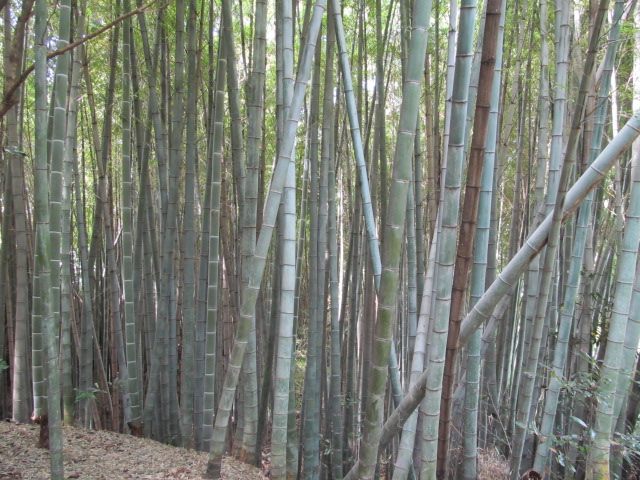
The bamboo forest was not very large, but it was impressive and very evocative for those of us who watch Asian dramas. The wind did whisper through the leafy tops, but no epic aerial martial duel took place, and no handsome hero marched out from between the bamboo trunks. It is hard to see the scale from a photo, but each trunk was too wide to wrap my hands around and many times taller than me.
There were multiple greenhouses and also an education center. There were also a couple of walking trails that wound up to the top of the local peak, from where you could reportedly see some cool views. We didn’t do the climb as it was mid afternoon on a hot muggy day and we much preferred to wander among the shady lower gardens. There’s a convenience store and cafe/coffee place down near the entrance and after a stroll an ice cream and drink were welcomed.
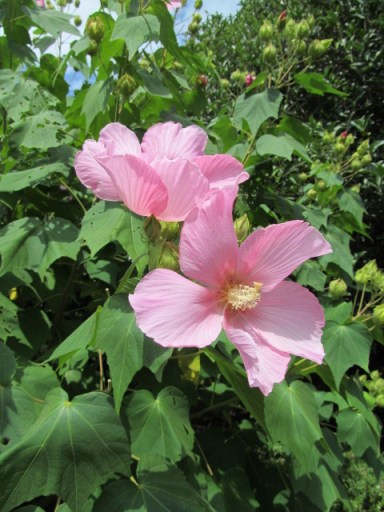
Halla Arboretum is free to enter, and is a perfect place for a couple of hours away from the hustle and bustle of the city. It apparently can be packed with tourists, but when we went we only saw a handful of people and they were easily avoided. We had a relaxing stroll around enjoying nature in its many guises, from the tall stately trees to unassuming medicinal plants hiding in the undergrowth. Some signs were in English, as was the handy guide map so that made identifying some of the plants easier. Not as amazing as Yeomiji Botanic Garden, but much closer to the airport if you are only on a quick visit.
Have a great day everyone.
You may also enjoy Spirit Garden, The Stone Men of Jeju, and The Humor in Mud.
Photo credits to me. Please do not copy or use without permission and accreditation.
Fare thee well: 2NE1.

Back when I started writing about Kpop I planned to write a weekly series on disbanded groups, but soon realized that it was too sad a project and it fell by the wayside. Well today I’m writing once more about a disbanded group, and it is the saddest post I’ve written so far. 2NE1 an iconic and extremely talented group of ladies has called it quits as a group. In many ways it wasn’t a complete shock to their fans as there had been hints, rumors, and an announcement about Minzy not renewing her contract, but to hear the news officially from YG Entertainment hit hard. Many fans have expressed their sorrow and grief online, to the extent that the break up is trending on Facebook, with over 110,000 people talking about it. It was even mentioned on a local radio station in San Antonio which I’m pretty sure has never played anything Kpop except Gangnam Style by Psy.
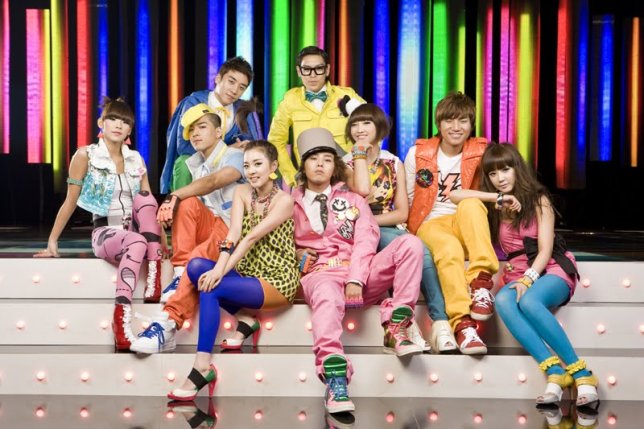
A sister group to BigBang at YG Entertainment 2NE1 always stood out from the crowd of look alike girl Kpop groups, both visually and musically. They had a unique style, somewhat edgy and even when young projected a strong feminine image. Even in the beginning (2009) with the cutesy Lollipop, a song created to promote a LG Cyon cell phone, you could see and hear their talent. Although not an official debut song Lollipop hit no.1 on various charts and was very popular.

Their official debut was with Fire which was released with 2 MV’s at the same time, a ‘street‘ version and a ‘space‘ one. It is fun to see how young they were and how skinny CL was. Lots of great songs followed, with some of my personal favorites being, I Am The Best, Come Back Home, and Lonely.

Over the years the awards for 2NE1 were many and varied, but perhaps all one has to say is that 2NE1 has won the most grand awards, for a female artist, in the history of MAMA (Mnet Asian Music Awards) with 4 wins (2 Song of the Years, 1 Album of the Year and 1 Artist of the Year).
2NE1 had a huge and loyal fandom, most of whom will be sad and disheartened today, but it seems as though the breakup was not because of personal issues within the group, but more from the fact that each member now sees a better future outside of 2NE1. Remember that when they started out CL and Minzy were still quite young, in fact CL is the age now that Dara and Bom were when 2NE1 debuted. As people grow older so do their thoughts and views on life. Minzy didn’t renew her contract with YG back in April and has said she wants to “work even harder to return before you all with an improved and more honest version of myself”. CL wants to focus on being a solo artist and has just held a successful tour in the USA, while Dara wants to work on her acting, and that just leaves an uncertain future for Bom. Bom really never managed to get past the so called drug scandal, she was never officially charged with anything, and I’m really not sure if it is in her best interests to stay in Korea if she wants to continue singing. I really feel for her and my most heartfelt wish for her is that she finds something, or someone, to make her happy.

I wish all of them well in their future endeavors and maybe somewhere down the line, they’ll come back together for a 10, 15, or 20 year reunion like Sechs Kies and some of the other 1990’s groups. In the meanwhile I, like many other fans, will be marathon listening to 2NE1 for the next few days.

I usually end with ‘have a great day everyone’ but realize that today that might not be possible, so instead I wish you the best day it is possible to have under the circumstances.
You may also be interested in +Hello Bi+ches+, Fare thee well: LC9, Evol, and Led Apple.
Photo credits to original owners.
Please do not copy or use without permission and accreditation.
Jokgu: A Korean Foot, Tennis/Volleyball Game.

One of the most popular sports in Korea is called Jokgu, (Chukgu) which is relatively unknown in the West. Jokgu is pernaps played by more people than any other sport in Korea. This is partially because it is very popular on military bases as a form of exercise, and with all Korean men serving about 2 years of mandatory service most men are familiar with the game. It is also played in schools, and as well as being played at the amateur and professional level. Women do play, although it seems to be more popular with men. The National team was formed in 2012 which plays against countries which play Jokgu as well as those that play similar sports.

There are leagues in Europe for a similar sport called Futnet which began in the Czech / Slovak area, and that has since spread to other countries in Europe. There is also a similar game in East Asian countries such as Malaysia and Thailand called Sepak Takraw. Plus countries with large populations of Koreans such as the US and Canada have Jokgu leagues so the National Team gets plenty of chances to play.
Jokgu was invented, or rather reinvented, in the 1960’s by some members of the Korean Air Force. (I plan to write about the history of the ancient Chinese and Korean games that are the ancestors of Jokgu in a future post.) It proved popular as it required little equipment, except for a level area to play on, a rope or net tied across the center, and a ball. As the game spread rules became codified, except for pickup and neighborhood games where ‘house’ rules are still the ones followed.

In general you can only use the parts of your body below the knees and above the chin, which boils down to feet, shins, and head. Usually 4 people per side, although again this varies for pick up games. The net is about the height of a tennis net, and the ball is harder and smaller than a soccer ball. Where possible a court is marked on the ground. Court should be 16 x 7 meters. Players are allowed 3 contacts per side with 1 bounce in between contacts. So a player receives, then a set up, and then a strike. 3 sets are played to 15 points with the winners having to have a 2 point advantage to win.

You can often see Jokgu played at parks and on beaches in Korea. It also appears in variety shows such as 2 Days 1 Night, (ep 121) and Running Man (eps 153 & 274). There is a movie from 2013 called King of Jokgu which I haven’t managed to see yet. If you want to learn a little more about it you can watch the show Cool Kiz on Block where Jokgu is one of the games they learn, and then they challenge teams to see how well they’ve learned the game, or you can watch many of the videos of Jokgu on Youtube.

edit. The 2018 Chuseok Idol Athletic Championship special has introduced Jokgu as one of the games the idol will play.
Have a great day everyone.
You may also enjoy Archery in Korea, Ssireum Korean style wrestling, and Tuho.
All photo credits to original owners. Please do not copy or use without permission and accreditation.
 KPOP Jacket Lady