KPOP Jacket Lady
KDrama and KPOP Concert Reviews, Travel Tips, Korean Recipes and more
Recipe: A Make Ahead Cooking Sauce For Korean Cuisine.
Sometimes there’s a flavor or taste that appears in many recipes as an underlying layer that adds a typical ethnic slant to a dish. In many Asian dishes that taste is umani, the savory flavor that is present in many fermented foods. Soy sauce often provides that umani taste in many Asian recipes. But sometimes you want an easily added extra depth to your recipe and that is where a recipe like this enters the picture. You could consider this soy sauce based recipe in almost the same way as a herb infused olive oil, where you take a much used ingredient and add extra flavors to it.
The recipe that turns up the most on the internet when you search for Jomi Ganjang or Sweet Soy Base Sauce is from the Korean Table cookbook which is a wonderful resource for anyone interested in Korean cuisine. The recipe I use varies slightly and you may want to try both to see which you prefer. Both make a slightly sweet flavorful sauce which keeps well in the refrigerator and is easy to keep on hand to add to other dishes, such as Dakjjim, vegetables, or your favorite bulgogi recipe.


First slice 4-6 cloves of peeled fresh garlic, then you need 6-8 thin slices of fresh ginger. Fresh ginger is irregularly shaped so maybe a nub the size of the end of your thumb. Peel the outer skin off the ginger before slicing. Use one tsp of roughly grated black pepper, or you can crush 1 tsp of peppercorns. You don’t want these ingredients to be too fine as you will be discarding them later. Place the garlic, ginger and black pepper in a small pan and bring to a boil. Lower the heat and simmer for about 10 minutes. You don’t want the liquid to boil off so make sure you keep an eye on it and keep it at a simmer.


Gather together some more of your ingredients, 1 cup of soy sauce, 1/4 cup of a medium sherry, (or you can use wine) and 1/2 cup of light brown sugar. Add these to the pot, stir gently and then turn the heat up so the liquid comes to a rolling boil. Boil on high for 2-3 minutes. Take the pan off the stove and add 1 tablespoon of a good honey and 1 more tablespoon of the sherry, stir and allow it to cool down to room temperature. Once cool strain off the liquid and discard the rest.


Carefully place in an airtight container and store in the refrigerator. It should keep for 2 to 3 months.


Now I have this made and ready in the refrigerator it will be much easier to make other Korean recipes. (I also use it as a tossing sauce on roasted veggies such as brussel sprouts, carrots, or sweet potatoes.)
Have a great day everyone.
Hanji: The Paper of Korea.

Hanji is traditional Korean handmade paper that has such amazing qualities that it has been sought after by Emperors of China, Buddhist monks, and modern artists alike. It is made from the inner bark of the Dak, or Paper Mulberry tree, and mucilage from the roots of the Manihot Hibiscus plant. It was acid free before anyone knew that was a good thing, and has antibacterial, deodorizing, and sweat absorbing qualities as well. Disposable clothes and children’s clothes are being made nowadays because of these qualities. It is sometimes still used for traditional funeral attire. It has been noted for its toughness and durability for hundreds of years by both China and Japan and was a much sought after trade item. It is waterproof and has insulating properties and was oiled and used to make greenhouses in the 15th century.
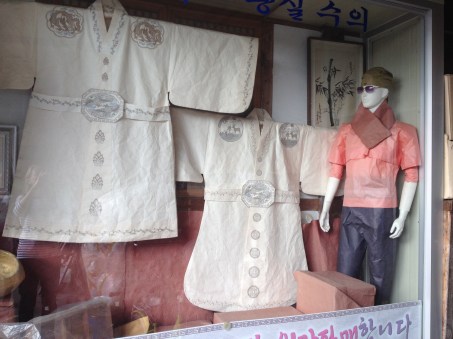
Paper making began in Korea sometime between the third and 6th centuries CE, as knowledge of the technique spread out of China. The Koreans probably first used scraps of ramie and hemp before they discovered the superior inner bark of the Paper Mulberry tree. During the Three Kingdoms period (57 BCE- 668 CE) hanji was used for official records. One of Korea’s national treasures, the Dharani Sutra, was printed on Hanji in around 704 CE. It is in remarkably good condition and still easily readable. The Dharani Sutra was printed using wood blocks and is one of the oldest surviving examples of such printing in the world.

By the time of Goryeo (918-1392) hanji was being used to make household objects, kites, money, religious texts, and history and medical books. The Government was active in encouraging the planting of Paper Mulberry trees and the production of paper, particularly since it was an important trading item with China. The Chinese Emperor’s official records were recorded on hanji paper and hanji was used to make the best paper armor.
The Chinese started using paper armor during the Tang Dynasty (618-907) and continued using it for over a thousand years. Paper was layered with cloth and lined with cotton padding and it was remarkably efficient. The Chinese have an adage that ‘soft overcomes hard’ that applies to paper armor in that paper armor yields to high force, and basically neutralizes or absorbs much of the impact energy of a sword or arrow. Hanji armor was the best as it didn’t rip or tear easily and was much in demand by China and Japan. In the records of Governor Xi Shang (847-94) it is noted that he had an army of 1,000 outfitted with paper armor and later in accounts from 1040 CE 30,000 suits of paper armor were needed for the garrisons of Shanxi Province. In general paper armor was cheaper, the exception being hanji armor, lighter, and cooler in hot climates. Navy troops prefered it over metal armor for obvious reason, plus paper doesn’t rust in damp conditions. Paper armor was still being used in the south of China up until the 19th century and an account from a Westerner comments that paper armor could stop a bullet at 100 yards.

In the French National Archives there is a letter from the Great Kahn to King Philip the Fair of France. It was written on hanji paper and is dated 1289. It is well preserved and easily readable, if you read Mongolian that is. France also holds a Korean guide for students from 1377. It is notable because it was printed using metal movable type 63 years before Gutenberg’s printing press. It too was printed on hanji and is extremely well preserved.
By the time of the Joseon Dynasty (1392-1910) the demand for hanji was huge; not only did the Government need large amounts for official records and books, but people used hanji for household objects such as fans, sewing boxes, tobacco pouches etc. Colored hanji paper became available and hanji replaced silk for the artificial flowers used for Buddhist rites and festivals. Mixed fiber paper using pine bark or rice straw along with the Paper Mulberry fiber were produced as people looked for cheaper options. Hanji crafts became more diverse with different methods employed. Jido was when many layers of hanji were pasted onto a frame to produce boxes etc. Jiseung used strips woven together to make cording which was then used to make baskets, mats etc and Jiho which was somewhat like paper mache in that molded objects such as bowls and lids could be made.

As Korea became more open to Western influences, and cheaper products became available there was a decline in hanji production. It is slow, complicated and labor intensive to make hanji so when cheap western mass produced paper appeared in Korea in 1884 and the first paper factory opened in 1901 the future for hanji didn’t look bright. The Japanese occupation (1910-1945) saw the suppression of much of Korea’s cultural heritage and hanji production saw a further decline.
Even when Korea began to govern itself once again there was a strong push for modernization and western methods, which led to many traditional homes that would have used hanji products for doors, matting etc being destroyed. China has pumped tons of cheap paper into the Korean market undercutting the few businesses who were still trying to make a living from making hanji. However, some makers of hanji have hung on and in 2009 there were still 26 hanji mills in operation. It is mostly artists, calligraphers, conservationists, temples and tourists who continue to buy hanji. There is not much of an export market but try looking online ,because we should all draw, write, or paint on real hanji at least once in our lives. And if we are to believe the Korean saying that ‘paper lasts a thousand years and textiles last 500’ we might be leaving a legacy for the future.


But the future is not all bleak. The Korean Government has recognized that certain aspects of Korea’s cultural heritage will disappear without outside help, so they have set programs in place to help protect their intangible cultural assets. This classification allows certain craftsmen and women to be recognised as experts in their field with the duty to pass on their knowledge to future generations. They get a small stipend and much honor, which may not be enough, but is a step forward. The Government has also helped provide venues, outlets, and support towards showcasing these arts. Some official tourist offices now list classes in such things as making hanji, kimchi, or traditional kites etc. On my next visit to Korea I’m going to go back to the hanji shops in Insadong with a much better appreciation for hanji and I intend to buy myself a selection to bring home with me. Don’t let the traditional crafts die, support the craftsmen and artists whenever you can.

Edit. I finally got to a hanji making place in Jeonju on my third trip to Korea and was able to watch them make hanji paper. It really did look arduous. No wonder so few young people learn how to make it nowadays. Fortunately this one is located in a very popular tourist town and looks likely to continue.


Have a great day everyone.
To see how hanji is made I suggest you watch this video.
You may also enjoy Korea And The Silk Road, Hwacha: A Korean ‘Rocket Arrow’ Launcher, and Korean Games.
Please do not copy or use without permission and accreditation.
Photo credits to original owners. The two document images as well as the box are from pinterest. The rest from Elle Marzec and myself.
Seoul: In Photos.


A few of my friends have asked me why I’m heading back to South Korea for the second year in a row, when I’m known for always going somewhere new and different. I’ve come up with a few different answers for them, but they all boil down to the fact that it is an amazing place that I didn’t see, taste, feel, and experience enough. There have been other places where I would have liked to have stayed longer, or to revisit at a future date, but none of them have tugged at my heart like Seoul. It is as if I am homesick for a place I’ve never really lived.


My daughter and I spent 12 days in Seoul in the Spring of 2015, with our main objective being the Spring Cherry Blossom Festival. We planned multiple things to see and do every one of those days, leaving our apartment before nine in the morning and rarely getting back before 10pm and often later and still we didn’t see everything. The spring flowers were amazing starting with the Forsythia, then the Cherry trees, followed by the Azaleas. The flowers reach their peak blooms at different times in different parts of the country and there are updates available so you can track when and where to see them.


Seoul is a large densely packed city, in fact the Seoul metropolitan area is the 2nd largest in the developed world and it has twice the population density of NYC. It does, however, have multiple green spaces, parks, and even tree covered mountains, both in and surrounding the city, in which to walk. There are numerous parks lining the Han river and a 40 kilometre bike path that follows the river too.


The 157 kilometre walking trail that circles the city passes through both urban and mountainous areas. So there is no shortage of places to escape to when the need arises. We went to the zoo in Seoul Grand Park for a lovely relaxing day away from the hustle and bustle of the city streets.


Seoul has so much history, with there having been a city on the site for about the past 2,000 years. We visited palaces, temples,and burial sites, all of which were very beautiful. On a side note, many historic places in Seoul were damaged or destroyed during some of S.Korea’s turbulent past, but they have been restored by expert craftsmen using the old techniques and authentic materials.


Seoul is a very forward looking and modern city and we were often amazed by some of the modern architecture and public art that dotted the city. In some places the old buildings were left and the modern ones seem to grow and mold around them, for example in the second photo the new government building behind the old seems like a wave about to crash down on the old.


There were so many choices when it came to eating and shopping that it was hard to decide where to go, although the hotteok at Insadong has to one of my favorite street foods ever. We tried all sorts of street food and went to restaurants, chicken and beer places, traditional style eateries, cafes, and tried as many differents foods as we could. Snacks even came with your beer at E-Mart for when you needed a late night boost.


We shopped at open air street markets, underground markets, fancy modern shopping malls, local convenience stores and traditional craft stores, spending a fair amount of time amazed at the selections of things to buy. (Makeup, stationery, kpop stuff, traditional games, and handmade garden tools, among other things, all came home with us.)


There were world class museums to explore, and fun trick art places to joke around in.


We interacted with street performers in Hongdae, and tried wearing Hanbok.


In fact there were so many different things to do and see I haven’t even scratched the surface on what there was to do. I ended up being so busy and wanting to so immerse myself totally in the experience that after a while I took fewer and fewer photographs. So no photos of the cat, dog, or Hello Kitty cafes, or even of me learning to make kimchi. Only one or two kpop photos, partially because the recording of M Countdown allowed no photos.


How could I forget the locks of love at Namsan Tower, or the Rainbow Bridge.


I also haven’t mentioned the day trip to the DMZ or the clubbing we did at the weekends or many other things we saw and did, but I’ll end this by saying that if you ever have the chance to go to South Korea I highly recommend it. I’ve been to about 36 countries, I say ‘about’ because some place aren’t countries now but were when I visited them, so I don’t know if I count them or not, but the bottom line is I’m going back this summer so has to be good, right? Although this time we’ll be only staying a few days in Seoul before heading down to Busan and then to Jeju Island. I’m so looking forward to it.
If you need a place in Seoul to stay I highly recommend The Seoul House which was wonderful, and amazingly convenient to local markets, restaurants etc and 3 different subway lines. Ken, the host, was very friendly and knowledgeable. It was not in a tourist area which we prefer as we were able to make Korean friends who we still keep in touch with.
If you’ve been to South Korea, what was your favorite thing to eat, or favorite place to visit? Let me know in the comments below.
Have a great day everyone.
Cucumber Kimchi.
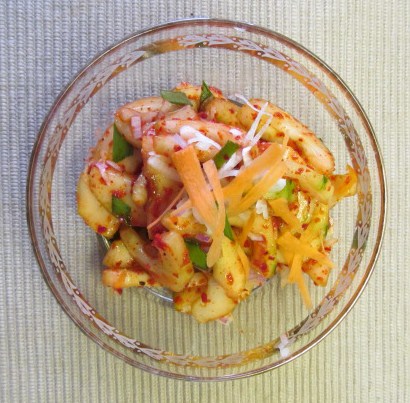
Kimchi is so much more than what most of us are familiar with, it is like cheese in a way in that with similar basic ingredients, and methods, many different cheeses can be produced. So it is with kimchi, there are almost 200 foundation recipes for kimchi and then multiple versions of each of those. Also like cheese, kimchi is a fermented food. Kimchi contains beneficial bacteria that aid digestion.
Kimchi is also seasonal in the sense that kimchi was made with what was fresh at the time, so summer is the time for kimchi made with summer produce. I have a glut of cucumbers from the yard right now so it is time to make some cucumber kimchi. This is a quick and easy version that can be eaten immediately, but it doesn’t store well. So only make what you can eat within 3 days.

Cucumbers have a long history and date back over 3,000 years as a cultivated crop. Domestication began in the Indian sub continent and slowly spread outward from there. The Ancient Greeks and Romans were familiar with cucumbers and regarded them as medicinal as well as a food. The Emperor Tiberius of Rome demanded that he have cucumbers available year round and the Romans came up with techniques to grow cucumbers even through the winter time. Cucumbers are also mentioned in the Bible as one of the foods available to the Israelites while they were slaves in Egypt. The Emperor Charlemagne in 9th century France knew of cucumbers and by a few hundred years later they were known all over Europe and had been transported to the New World.
World cucumber/gherkin production is in the millions of tons, with China producing over 54 million tons a year. Turkey ranks 2nd, U.S.A. 7th, Mexico 8th, and South Korea 18th. Different countries produce different types of cucumbers, the main three being, slicing, pickling, and burpless. Asian cucumbers usually fall into the burpless category.
Recipe: Cucumber Kimchi.
I only used a couple of cucumbers because this dish needs to be eaten within 2 to 3 days. Wash cucumbers and then top and tail them and peel. If you are using the small store bought baby cucumbers or seedless cucumbers you can leave the peel on.


Cut into 2-3 inch sections and scoop seedless out with a spoon. Again you may not need to do this depending which type of cucumber you bought. The seeds can be bitter in regular American cucumbers and it is the seeds that can also cause a little tummy upset, hence people wanting burpless or basically seedless cucumbers.


Cut into slices and place in bowl or deep plate.


Sprinkle with 1 tsp good salt, kosher or sea salt.Mix. Cover with plastic wrap.


Place a plate or saucer on top to gently weigh down on the cucumber slices. This process helps remove excess water. While this is sitting to one side gather your other ingredients. I also found garlic chives and Egyptian Walking onions in the yard. You can use spring onions or English chives if you can’t find Korean chives.


Wash your produce and let drain, or pat dry. Cut the garlic chives on a slant with scissors. chop the onion finely. I only use a small amount of the chives and the onion, it all depends on personal taste. So 1 tbsp of garlic chives, 1 of finely chopped spring onion, and 1 tablespoon of red onion. I also added some slivers of carrot to add a bit more color.


Gather the rest of the ingredients. The cucumbers will have ‘sweated’ some liquid by now. Drain the liquid.


Rinse the cucumber slices, drain and place back in bowl on top of a couple of paper towels. pat dry with paper towel.


Place prepared cucumbers in large bowl along with 1 tsp Korean red pepper flakes, 1 tsp sugar, and up to 1/2 tsp fish sauce. I also add a little black pepper. Mix well.


Let this rest a couple of minutes and then add the finely chopped onion and sliced chives and shredded carrot. And you are done. You can eat this immediately or keep in the refrigerator for a couple of days. The flavors will develop better if you leave in out on the counter for an hour or so before putting it in an airtight container in the refrigerator.


You can use your cucumber kimchi as a banchan or you can add fresh ripe tomatoes and serve it as a salad or mix it in with lettuce and spring greens. You can also add it to sandwiches for extra zing.


Have a great day everyone.
Please do not copy or use without permission and accreditation. All photo credits to Debora Marzec.
You may also enjoy reading Eating At Gwangmyeong Traditional Market, Foodie’s Delight: The Street Food Of Korea, and Bibim Guksu: Korean Cold Spicy Noodle Salad.
Recipe: An Easy Way To Make Japgok Bap.
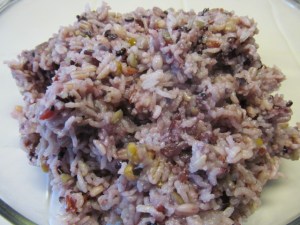
Japgok bap is a multigrain+rice dish that is becoming increasingly popular as more and more people are realizing the health benefits of whole grains and legumes. It is an ideal way to mix powerhouse carbohydrates and fiber into your daily diet. Japgok bap can use a wide variety of ingredients and you can find packets of mixed grains at most Korean and Asian grocery stores. If you want to go the easiest route then one of these mixes might be the way to go. I wanted to use some of the beautiful rice I had in the pantry so chose not to use a complete mix.


Usually Japgok bap is made with dried beans as well as the split peas and lentils I used, but I didn’t want the fuss of soaking dried beans. If you like red or black beans you can easily use canned beans to avoid the soaking process. I did cheat a little by using a ‘quick cook grains mix’ which contained barley, lentils and split peas.


The thing that takes the longest about making Japgok bap is making sure that the pre-preparation is done and that means the soaking of each ingredient. Whilst I skipped on the beans, needing an overnight soaking, I did want to use some of my highly nutritional black rice so I put 1/4 cup of mostly black rice, with a little red and purple in there too, in a bowl to rinse, drain and then I added fresh water to let it soak for 5 hours. If I use brown rice I soak that for about an hour. After 5 hours or so, I drained the water off the black rice and put it to one side. If you want darker rice you can use some of this water to cook the rice, or you can use fresh.


I used 1 cup rinsed and drained white rice, to 1/4 cup (as measured before soaking) black rice, and 1/2 cup of the quick cook barley, lentil, split pea mix. You can play with these proportions, but you always need some white rice to help make it easier for your body to digest the other grains. Mix it altogether and place in the rice cooker along with 3 cups water and let the cooker do its thing.


If you noticed I didn’t add any salt or spices which means you can use this multi-grain dish as a side dish, or you can add vegetables and maybe meat to use it for stir fried rice, or you can add honey, cinnamon and dried fruit to make an amazing breakfast or dessert. It is basically a healthy dish which forms the base for multiple add ins or add ons which taste so good you forget that you are eating healthy at all.
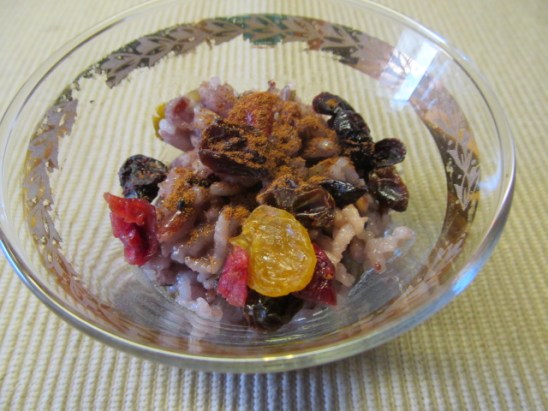
To make sure I have some handy for other meals I usually freeze some in small portions. While the Japgok bap is still warm from the rice cooker place a portion in the middle of a piece of plastic wrap and wrap it up like an envelope. Place 1 or 2 inside a baggie and place in freezer. To thaw take a portion and unwrap it and place it in a microwaveable dish, pour a little water on top and place a lid or cover on the dish and microwave for 2 minutes, check to see if it is hot, and microwave some more if necessary.


Have a great day everyone.
KPOP:What Is It Really All About?

Kpop, or sometimes KPOP, is technically just a short abbreviation for Korean popular music, but in many ways it has come rather to denote the idol sub genre of Korean music in the minds of many foreign fans. So while Psy with his Gangnam Style MV, or Busker Busker with their Indie sound, are very much part of Korean popular music there are Kpop fans, particularly those overseas, who don’t see them as such; so there does seem to be somewhat of a disconnect between what Koreans and foreign fans mean by Kpop. At clubs in Seoul they play very little, if any Kpop music, as in some ways it is not as popular there. This idol style music, featuring attractive young performers with catchy tunes, quirky MVs, and amazing choreography along with excellent fanservice, has taken Asia and many other parts of the world by storm. Kpop idol groups have held concerts on all continents except Africa and Antarctica, and with its growing popularity in Africa I doubt it will be long before only Antarctica is Kpop free. (My daughter’s penpal in Ghana was thrilled to receive a Kpop care package from us as she is a huge fan.)
The appeal of Kpop seems to change with whomever is describing their reasons, but there are definitely reasons. The music is often fun and happy with bright tones and uplifting beat, other times it can be sad to suit those times when nothing seems to be going right. There’s songs to sing and dance along to and songs that tug at your heartstrings, there are songs suitable for the very young and some that are suitable more for adults. But for quite a few people it is the attractiveness of the idols themselves and the feeling that the idols actually care for their fans. There is a sense of belonging within the fandoms and many young people in particular find that welcoming.

Idols go through a training process that can last many years before their debuts, and they have to learn many things such as a second or third language, how to act in public and in front of cameras, how to do fanservice etc as well as continuing their education, if under age, as well as their music, singing, and choreography lessons. Idols appear on variety and music shows, they do charitable works and raise money for good causes, they act in Kdramas and perform in musical theatre. They are trained to appear well in the public eye all the while showing their good nature and character. Many of the idols have engaging smiles and do seem to be enjoying what they do even though it is hard work. Bad apples, or those that don’t conform often are let go. The Kpop industry does have a dark side and various management companies have been found guilty of overworking the idols within their companies, however laws are now in place and hopefully there will be more good management practices than bad in the future.

There’s a Kpop song for everyone. Even with the language barrier many emotions and ideas easily come through in the songs. If you want to learn the lyrics many of the MV’s have English subtitles and lyrics can be found online for audio listeners.
I tend to be fairly literal and use the label Kpop to mean a wide range of Korean music, but for most of this discussion the focus will be mostly on the idol groups. I see there having been three ‘generations’, or decades of idol groups as we would recognise them today. The first generation being those groups who debuted and were popular in the 1990’s. Groups such as HOT, god, Fin.K.L, 1TYM, and Shinwa are all considered the originators of the Kpop we know today. Remarkably Shinwa is still producing albums and MV’s. Most of the other groups have disbanded or are inactive, although individual member show up from time to time in Kvariety shows and Kdramas. Others have gone into the producing or management side of the industry.
The second generation in the 2,000’s saw the formation of such classic groups as TVXQ, Super Junior, Girls’ Generation, Brown Eyed Girls, BigBang, Shinee, and Beast. Solo artists such as Rain and BoA also were extremely popular. In fact the later part of the decade saw so many really good groups debut that that can be said to be the beginning of the expansion of Kpop out into the wider world. Groups began to travel to Japan and then China to hold concerts and fan meets and they also produced Japanese language versions of their songs. Japan has the 2nd largest music industry in the world, after the U.S. so success in Japan can really make a difference to a group’s success.

The 3rd generation of those debuting since 2,010 has seen an explosion of idol groups, unfortunately this has led to the oversaturation of the business and it seems that only those with the backing of the big management companies are likely to succeed long term no matter how talented they are. Some standout groups include Teen Top, Block B, Orange Caramel, EXO, Mamamoo, BTS, Got7, and quite a few more.
So many fans will eagerly tell you which group(s) they follow, the names of the group members, where each member is from, and who their bias is. They may have learned Korean, or at the very least the Korean alphabet which is called Hangul. They may have travelled to concerts and fanmeets far from home and in the process become more confident. Some young fans have even travelled to Korea or are planning to go and teach English to Koreans. (The Korean Government has a very good program for English speakers wishing to teach in Korea.) There are many good aspects to the Kpop world that have effects beyond just listening to music. Fans have learned about Korea and the world, they probably have tried Korean food, watched Korean movies, and maybe even played Korean games. By following Kpop they have become more culturally aware, which in these days and times is a good thing.
So if you’re already a fan let me know in the comments who is your favorite idol or group, and if you’ve never listened to anything other than Gangnam Style give Kpop a chance. You might be surprised.
Have a great day everyone.
Jegi Chagi: A Korean Hackysack/Shuttlecock Type Game.
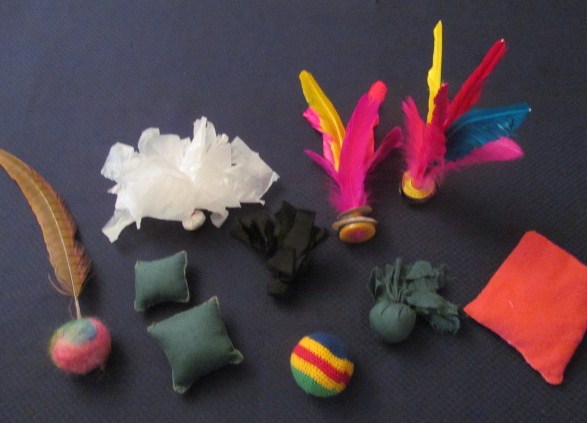
Jegi Chagi is a traditional Korean game in the hackysack/shuttlecock family. It probably descended from Cuju, an ancient Chinese ball kicking game, which is also an ancestor game to Soccer. Cuju led to the Chinese game of Jianzi which was popular during the Han Dynasty (206 BCE – 220 CE) and was probably introduced to Korea at an early date as there are mentions of the game in Goguryeo during the Three Kingdoms period. The brightly colored feathered shuttlecocks in the photo above are modern Chinese Jianzi. (I will be buying modern Korean Jegi Chagi on my next trip to Korea to add to my collection.) You can also buy an American version called Kikbo.
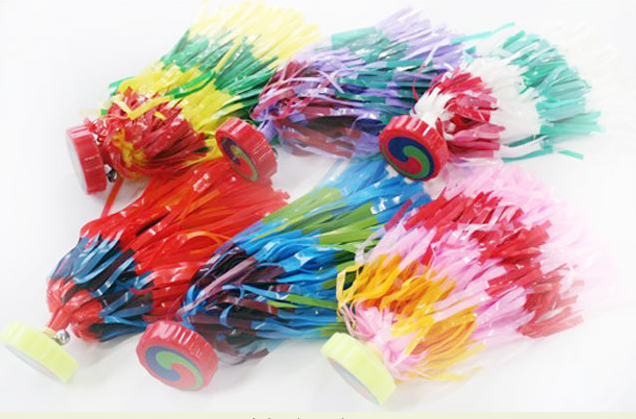
Traditionally, however, the construction of the jegi would have been much more basic. Originally slightly flattened cloth balls were filled with clay, ashes, or even horse dung. A feather, typically a long tail feather from a pheasant, would be stuck into the flattened ball.
In order to get a playable result there has to be a balance between weight, because you need it to fall, and drag, because you want a slow fall so you have time to kick it back up into the air. The drag also somewhat lessens the effect of something falling and hitting your foot, so while you could play with just a large pebble or small rock, it wouldn’t be much fun. When coins with holes in the middle became easily available jegi started to be made with said coins being wrapped with cloth or korean paper.

The game was once associated with winter and the Lunar New year in particular. Nowadays it is mostly played by children, with Korean schools teaching it in third or fourth grade. Jegi Chagi provides many health benefits as well as increasing strength, agility, concentration, patience, and stamina. It also shows up in K variety shows as a challenge, mission, or just for laughs. It looks like an easy game but it is actually much harder than it looks and takes practice to become good at it.

The basic idea is to use the side of your foot to keep the jegi in the air.
If you put your foot down to the ground between each kick it is a version called Ddangganghji, but if you keep kicking the jegi up into the air without letting your kicking foot touch the ground it is called Hullangyi. You can also alternate feet, play with a partner or group, or even play using your heel instead of the side of your foot. It is also a game which is open for you to invent house rules or methods of play; maybe you have to kick it through a hoop or into a bucket after a certain number of kicks. You lose if the jegi touches the ground or your hand.
It is quite easy to make your own jegi, the simplest way is to use some coins, a plastic grocery bag, and a twist tie. Cut a large square from the grocery bag and place 4 or 5 coins in the center.


Then gather up the plastic bag and twist the plastic to enclose the coins. Wrap the twist tie firmly around the twisted plastic just above the coins. Cut the plastic bag off at about 4 to 6 inches above the coins.


Now carefully cut the bag down towards the coins. The goal is to make strips that flutter and help add drag.


It is that easy. You can change things up by using paper or cloth instead of the plastic, or you can change the number and size of the coins you use.
This is great traditional game that is lots of fun and is good for you too. I was told that to help beginners tie the jegi to a piece of string and hang it from a branch, that way while you are practicing you don’t have to bend down to the ground to pick it up each time you miss. Let me know if you play Jegi Chagi or have any hints or other methods of play in the comments below.
Have a great day everyone.
You may also enjoy kai-bai-bo, gonggi, ssireum, alkkegi, ddakji, tuho, and yut.
All photo credits to original owners.
Please do not copy or use without permission and accreditation.
Rice: Feeding Half The World Every Day.

As my regular readers have no doubt noticed, I have started to think a lot more about the food I eat. We have so many food choices here in the west and I think sometimes we just buy ingredients and make or eat our food without paying much attention to each ingredient. For example when was the last time you ever thought about what a particular ingredient is, or who eats it, or to where it is grown, or how long has it been cultivated? Today I’m planning on making Korean Sticky Rice Balls with fruit and nuts to add some sweetness and crunch, and as I was looking at the recipe I realized that I’d never given much thought to the rice that is such a large part of Korean cuisine. In fact rice is a major part of the cuisine of many cultures and it feeds about half the world’s population. It is the most commonly eaten food in the world with one out of every five calories consumed by all the humans in the world coming from rice.
It is thought that rice was first cultivated and the domestication process begun in the Yangtze River Valley in China about eight to ten thousand years ago. Humans were eating wild rice before then, but not specifically cultivating it. Other places in China and older dates have been argued by scholars. Recent genetic testing seems to suggest an even older date. So not only does rice feed half the world nowadays, but it has been feeding humans for longer than any other domesticated crop. The domestication of rice ranks as one of the most important developments in the history of the world.
The growing of rice gradually spread outwards from China to neighboring countries and then eventually the world. Rice is grown on all continents except Antarctica, although Asian farmers provide over 90% of the world production. In the United States over 100 varieties of rice are grown, mostly from six states, California, Louisiana, Arkansas, Texas, Mississippi, and Missouri.

Rice is a type of grass, like wheat and corn. The first domesticated rice was Oryza Sativa. (Much later another type of rice was domesticated in Africa called Oryza Glaberrima.) Through natural selection and crossbreeding there are now thousands of varieties of rice grown in over one hundred countries. Oryza Sativa varieties of rice can be roughly divided into four categories, Indica, Japonica, Aromatic, and Glutinous. Please note that Glutinous means sticky in this context, not that it contain Gluten. Indica is a long grain, non sticky rice that can be grown in drier conditions. Japonica is a medium grain sticky rice that grows in wet conditions while Aromatic rice is medium to long grain with a nutty aroma and taste. Glutinous rice is short grained and very sticky and is sometimes called sweet rice, not because it itself is sweet, but because it is favored for dessert recipes. . Rice is described by its grain length, stickiness, aroma, texture, and flavor. Wild rice is actually unrelated to rice and is Zizania Palustris.
The flavor and nutritional value of rice can also be changed by the process it goes through before reaching the local store. White rice is the most processed and least nutritious, while brown rice is far less processed and has the bran layer left intact, therefore increasing its nutritional value. Brown rice takes longer to cook and doesn’t store as well as the oil in the bran layer can go rancid. Brown rice is rich in nutrients, vitamins and minerals.
There are other varieties of rice that are increasing in popularity in the west, notably the colored varieties. Black rice, sometimes called Forbidden Rice, because it was once reserved for Chinese Emperors, purple rice and red rice, have all become more easily available. These are all more healthy rices and black rice in particular is full of antioxidants and is rich in anthocyanins which are what makes acai and blueberries so good for us.


In Korea rice is still a staple food even with the influx of ingredients and cuisines from around the world. In many countries as people have more money they tend to eat less staple foods and eat a larger variety of different foods. In Korea rice is a symbol of life and prosperity and historically how much rice you had stored was an indication of your wealth. Many types of rice are eaten in Korea and there are numerous delicious rice recipes to try, but even if you only have white rice and Kimchi and are sharing it with a friend it becomes more than just a meal, it becomes symbolic of deeper meanings. Koreans do not like to eat alone. Eating and sharing food is an important part of their culture that is hard to explain, it is more than eating, or an invitation to friendship, it is perhaps an acknowledgement of the importance of eating and companionship to life.
Recipe. Sticky Rice Balls with Dried Fruit and Nuts. Heukmi Joomeokbap.
Place 1/4 cup of black rice and 1 cup of glutinous (sweet) white rice in a bowl and rinse and drain two or three times. Cover the rice with water and let it soak for at least 5 hours.


Cut the dried fruit and nuts up into small pieces. I used mixed dried fruit, dates, and walnuts. In Korea you would be more likely to find jujubes, chestnuts, and pine nuts. You need about 1/3 of a cup total of whatever mix of dried fruit and nuts you’ve decided to add.


Put the dried fruit and nuts to one side while you drain the water from the soaking rice, keeping 1 cup of the liquid. Put the drained rice in the rice cooker along with the dried fruit and nuts. Add 1 tsp of good salt, 1 tsp dark sesame oil, and the saved water.


Mix well and let the rice cooker do its thing. When it is cooked transfer to a bowl. If you are eating it as a side dish it is now ready to eat. If you are making sticky rice balls, place some plastic wrap on the counter, about 6 inches is more than enough. To make the process a little less sticky sprinkle some good salt on the plastic wrap. You might need to wait a few minutes for the rice to cool just enough so that you can safely handle it. Place a small dollop of rice in the center of the wrap then gently bring up the sides of the wrap to enclose the rice, twist the wrap and it will pull the rice together into a ball. Unwrap ball and place on a plate or in container. You can also slightly squish the ball to make into a pattie which you can then fry gently to heat up as a side dish.


Depending on which fruit you use this is not a really sweet snack, although it is tasty and very healthy for you. Use within a day, or freeze, as rice doesn’t really taste so good after a while.
Ingredients. 1/4 cup black rice. 1 cup glutinous white rice. 1 cup of the saved soaking water. 1/3 cup mixed dried fruit and nuts. (not peanuts) 1 tsp good salt (sea or kosher etc) 1 tsp dark sesame oil.
Apart from having to plan ahead to soak the rice sufficiently this is quite a quick and simple recipe. Changing which dried fruits and nuts you use can change the taste somewhat. I plan to try adding dried cranberries or dried tart cherries for a Thanksgiving side dish to go with a turkey, or even a pork roast.

Have a great day everyone.
Banner Time: Making a Fan Banner for a Kpop Concert.

The popular Kpop group Got7 will be on their Fly tour in the US in less than a month and lots of fans are gearing up for the concerts. In the past I’ve noticed all sorts of fan made posters, banners, t-shirts, and other items made to celebrate and show their dedication to the group they are there to see. I don’t particularly like the poster board signs that so many fans take, mainly because they are bulky and when held aloft during the concert can block the view of those behind them. But I understand the urge to show off their love for those on stage.
I have helped make signs for a flashmob and for concerts, but I tend to make mine on fabric. They are lightweight, flexible, easy to carry, and can easily be tucked away when not needed. I also make the larger ones for outside use and smaller ones for inside the venue so as not to block the view of those behind me. I often give my banners away to others in the crowd.
For these banners I started with an old cotton sheet, which I tore into smaller pieces. Yes tore, it is often easier to tear a straight line in fabrics than to cut one. You just make a starter cut of about an inch where you want it to tear and then rip it. You will also need graph paper.


Plot out the design you want to make on the graph paper, which makes it easier to work out the scale and to keep all the letters the same size etc. Then tape the graph paper onto a window.


Place a piece of craft paper on top of the graph paper and tape it there. Using a pencil, or if you feel confident you won’t make a mistake, a sharpie trace your design onto the paper. That is now the pattern you will use on the fabric so make sure it is correct.You can try just tracing the design without using a window but I find it easier when the design is back lit.


Remove the graph paper from your window, and tape your pattern to the window. Carefully tape the piece of fabric onto top making sure it is centered and level. Trace the pattern onto the fabric.


Once you have the design on the fabric remove it from the window and place it where you are going to paint. The paint may bleed through the fabric onto the surface beneath so use paper or something underneath if necessary. I just use craft store paint. You can add a textile medium to your paint if you are going to wash the item, but I usually just heat set my banners with a hot iron.


Paint from the center outwards. It is worth buying a decent brush or two as that makes the painting go so much faster.


Paint around the small tricky bits first and then paint the larger spaces.Then paint the next color. Sometimes two coats of paint are needed for some colors. Using a hot iron slowly iron the back of the banner to set the paint.


And you’re done. This one took me the afternoon, but once you have a pattern made it is quicker and easier to make subsequent ones.
Join my FB page for a chance to win one of the small banners. https://www.facebook.com/groups/1710456275908983/ winner will be chosen June 22nd.
Follow me here on my website for a chance to win the one I made today. Winner will be chosen June 22nd.
Have a great day everyone.
Gamja Jorim: A Braised Potato Side Dish.

Gamja Jorim is a Korean recipe for potatoes in a garlicky soy based sauce. It is quite easy to make and doesn’t take too much time to prepare. There are quite a few different variations online as to how it is made and I’m sure they are all delicious. I’ll be showing you how I usually make it.


I take about a pound of potatoes, peel them, and chop them up into small cubes. Then place the cubed potatoes and place them in a bowl of cold water while working on the next steps. Cut half an onion into bite sized pieces, and put it to one side.


Peel and mince the garlic to end up with about 1 tbs of finely minced garlic. I use a garlic press for the cleaned cloves, or when I’m in a hurry I just use garlic from a jar.


Drain the water off the potatoes. Pour 2 tbs of vegetable or olive oil into a frying pan. Warm the pan and oil on medium heat, then put the potatoes in the pan. Be very careful because water and hot oil don’t mix and it might spatter, so make sure potatoes are thoroughly drained of water. But on the other hand it is not good to put the potatoes in a cold pan and oil as the potatoes would be prone to soak up the oil.


Cook the potatoes on medium high for 3 or 4 minutes stirring every now and then. Add the chopped onion and continue cooking for another 3 or 4 minutes. The soy based sauce is 3 tbs soy sauce, 2 tbs sugar, 1/3 cup water 1/2 tsp black pepper and salt to taste. You might want to wait and add the salt at the end because soy sauce can be somewhat salty.


Pour the soy sauce mixture into the pan and cover with a lid. You may need to lower the heat to medium, and let cook for about 10 minutes or until a toothpick can easily go into a potato cube.


Once the potatoes are cooked place in a serving dish and sprinkle with sesame seeds.
List of ingredients.
About a pound of potatoes. 1/2 onion. 1 tbs minced garlic. 3 tbs soy sauce. 2 tbs sugar. 2 tbs vegetable or olive oil. 1/3 cup water. 1/2 tsp black pepper, salt to taste. sesame seeds to decorate.
This recipe can be made spicy by adding 1 tsp of korean pepper flakes or even hot pepper paste. You can make it more colorful by adding another vegetable such as carrots. It can be made into a one meal dish by adding cubed ham, or you can add depth to the recipe if you add 1 tsp of malt syrup, or even honey, instead of the 2 tbs sugar. (So that would be 1 tbs sugar and 1 tbs honey for example.) It can be served as a banchan or a side dish, or in my case for today’s lunch just instead of regular potatoes.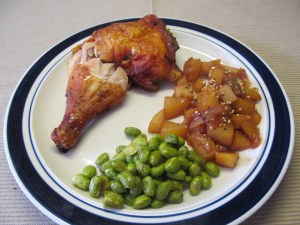
I’d love to hear of other variations for this dish or if you make it yourself let me know in the comments how it turns out.
Have a great day everyone.
Please do not copy or use without permission and accreditation, all photo credits to Debora Marzec.
You may also enjoy reading Korea Without The Chili Pepper! and Korean Tea.
 KPOP Jacket Lady